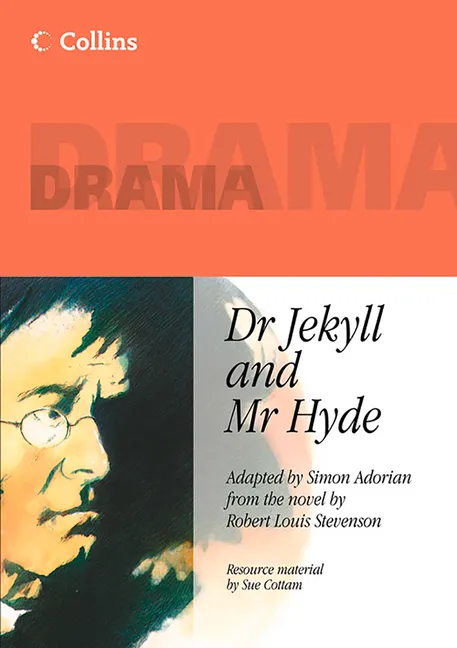
Dr Jekyll and MR Hyde
Report an issue
Tell us what's wrong and we'll take a look.
Thanks – we got it. We'll review and follow up if needed.
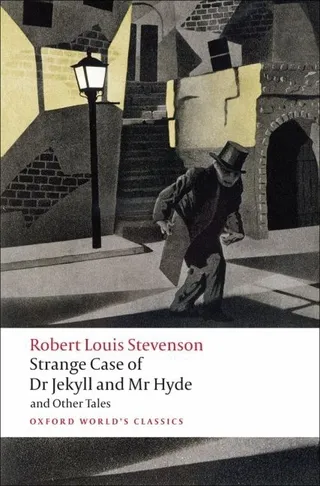
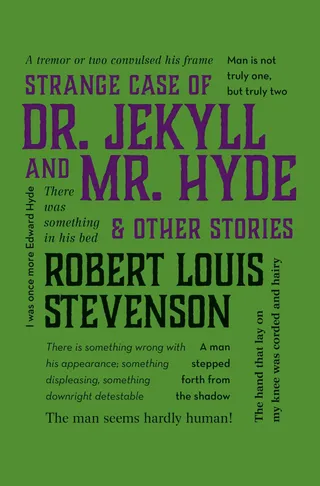
This dramatisation for schools of Robert Louis Stevenson's novel is presented in the form of a tv documentary involving expert witnesses trying to get to the bottom of the strange case. The story is reconstructed and the audience is taken back to Victorian London...
What happened to Dr Jekyll? 'Strange Cases', the investigative television documentary programme, tries to solve this puzzle using up-to-date know-how. Key events are reconstructed and expert witnesses examine the evidence to reach a chilling conclusion.
This play provides an accessible, exciting approach to the novel, as well as numerous opportunities for media work. Its language and atmosphere are true to Stevenson's story and make comparison work easy. The large cast, including a chorus, makes the play suitable for reading in class, acting in drama lessons or school productions.
The resource material investigates transformation, drugs and genetic engineering, as well as providing stimulating drama, media, speaking and writing activities.
Robert Louis Stevenson
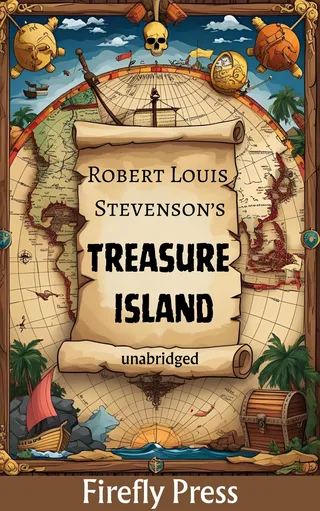
Robert Louis Stevenson was born in Edinburgh in 1850, the only son of an engineer, Thomas Stevenson. Despite a lifetime of poor health, Stevenson was a keen traveller, and his first book An Inland Voyage (1878) recounted a canoe tour of France and Belgium. In 1880, he married an American divorcee, Fanny Osbourne, and there followed Stevenson's most productive period, in which he wrote, amongst other books, Treasure Island (1883), The Strange Case of Dr Jekyll and Mr Hyde, and Kidnapped (both 1886). In 1888, Stevenson left Britain in search of a more salubrious climate, settling in Samoa, where he died in 1894.
More by Robert Louis Stevenson


Why Readwise Books?
Readwise Books is an ebook & audiobook platform that automatically logs how much you and your friends read, making it fun and easy to read more. Learn more →