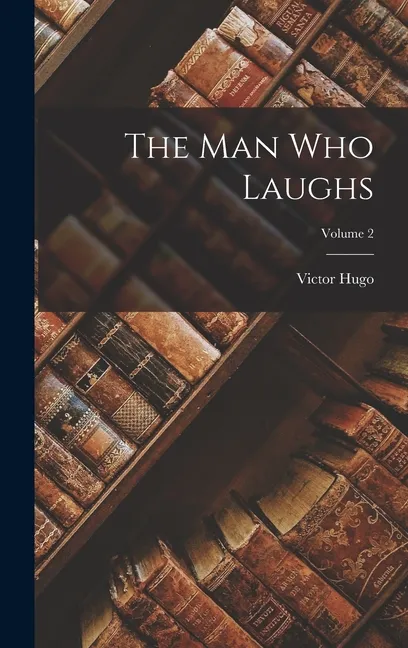
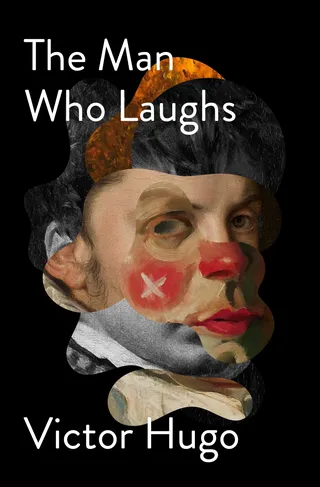
The Man Who Laughs; Volume 2
Report an issue
Tell us what's wrong and we'll take a look.
Thanks – we got it. We'll review and follow up if needed.
This work has been selected by scholars as being culturally important, and is part of the knowledge base of civilization as we know it.
This work is in the "public domain in the United States of America, and possibly other nations. Within the United States, you may freely copy and distribute this work, as no entity (individual or corporate) has a copyright on the body of the work.
Scholars believe, and we concur, that this work is important enough to be preserved, reproduced, and made generally available to the public. We appreciate your support of the preservation process, and thank you for being an important part of keeping this knowledge alive and relevant.
Victor Hugo
Victor Hugo (1802-1885) is one of the most well-regarded French writers of the nineteenth century. He was a poet, novelist and dramatist, and he is best remembered in English as the author of Notre-Dame de Paris (The Hunchback of Notre-Dame) (1831) and Les Misérables (1862).
Hugo was born in Besançon, and became a pivotal figure of the Romantic movement in France, involved in both literature and politics. He founded the literary magazine Conservateur Littéraire in 1819, aged just seventeen, and turned his hand to writing political verse and drama after the accession to the throne of Louis-Philippe in 1830. His literary output was curtailed following the death of his daughter in 1843, but he began a new novel as an outlet for his grief. Completed many years later, this novel became Hugo's most notable work, Les Misérables.
More by Victor Hugo



Why Readwise Books?
Readwise Books is an ebook & audiobook platform that automatically logs how much you and your friends read, making it fun and easy to read more. Learn more →