Report an issue
Tell us what's wrong and we'll take a look.
Thanks – we got it. We'll review and follow up if needed.
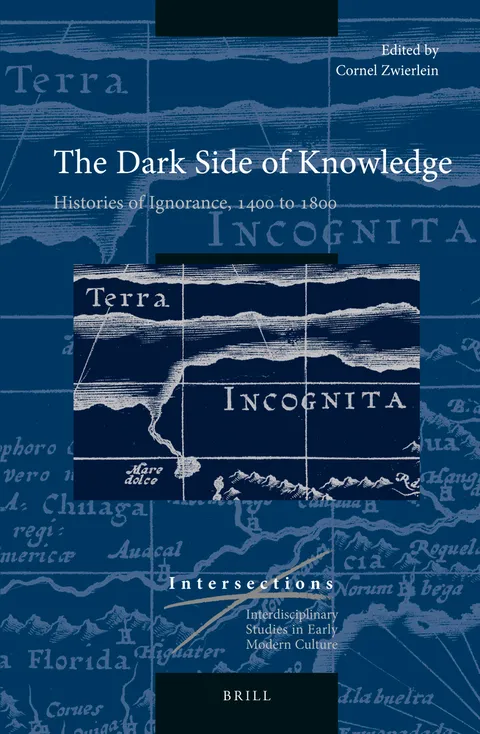
How can one study the absence of knowledge, the voids, the conscious and unconscious unknowns through history? Investigations into late medieval and early modern practices of measuring, of risk calculation, of ignorance within financial administrations, of conceiving the docta ignorantia as well as the silence of the illiterate are combined with contributions regarding knowledge gaps within identification procedures and political decision-making, with the emergence of consciously delimited blanks on geographical maps, with ignorance as a factor embedded in iconographic programs, in translation processes and the semantic potentials of reading. Based on thorough archival analysis, these selected contributions from conferences at Harvard and Paris are tightly framed by new theoretical elaborations that have implications beyond these cases and epochal focus.
Contributors: Giovanni Ceccarelli, Taylor Cowdery, Lucile Haguet, John T. Hamilton, Lucian Hölscher, Moritz Isenmann, Adam J. Kosto, Marie-Laure Legay, Andrew McKenzie-McHarg, Fabrice Micallef, William T. O´Reilly, Eleonora Rohland, Mathias Schmoeckel, Daniel L. Smail, Govind P. Sreenivasan, and Cornel Zwierlein.


Why Readwise Books?
Readwise Books is an ebook & audiobook platform that automatically logs how much you and your friends read, making it fun and easy to read more. Learn more →