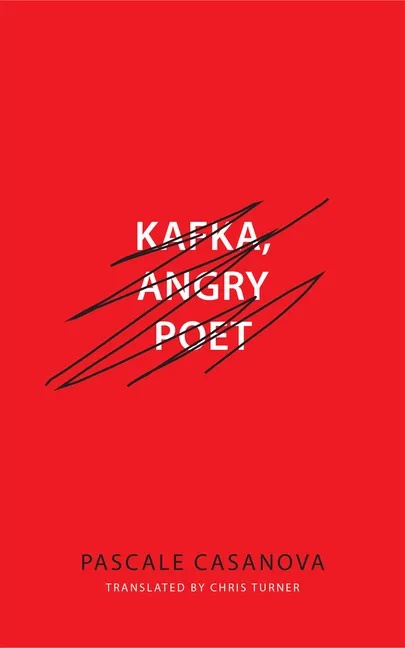
Kafka, Angry Poet
Report an issue
Tell us what's wrong and we'll take a look.
Thanks – we got it. We'll review and follow up if needed.
The hypothesis she develops is that Kafka began with an awareness of the tragic fate of the German-speaking Jews of early twentieth-century Prague and was subsequently led to reflect on other forms of power, such as male dominance and colonial oppression. The stories produced as a result were traps for the unwary, throwing the reader off the scent with the use of unreliable and even deceitful narrators. Curiously, says Casanova, it is not in literature that one finds the answers to these questions but in German ethnology, a field which, as an intellectual of the Austro-Hungarian Empire, Kafka knew well. Through her detailed research, Casanova shows us a combative Kafka who is at once ethnologist and investigator, unstintingly denouncing all forms of domination with the kind of tireless rage that was his hallmark. In so doing, she sheds light on the deep-seated reasons for Kafka's anger.
Pascale Casanova
Pascale Casanova is a researcher at the Center for Research in Arts and Language and a literary critic in Paris. She is the author of The World Republic of Letters.
More by Pascale Casanova


Why Readwise Books?
Readwise Books is an ebook & audiobook platform that automatically logs how much you and your friends read, making it fun and easy to read more. Learn more →