Report an issue
Tell us what's wrong and we'll take a look.
Thanks – we got it. We'll review and follow up if needed.
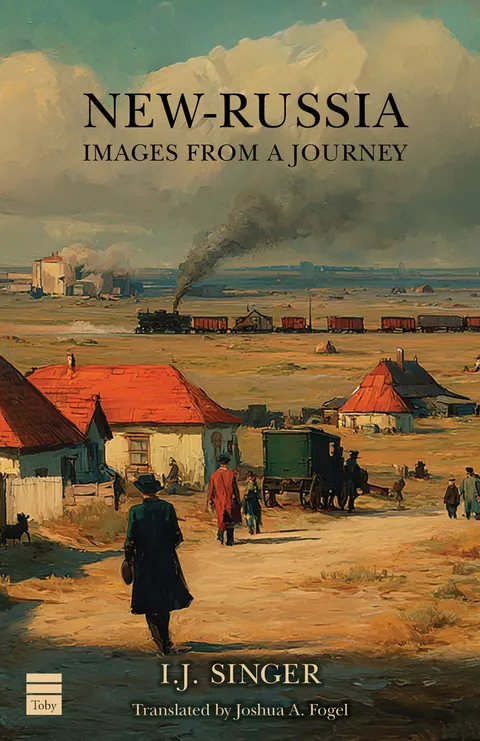
It was the autumn of 1926 when Israel Joshua Singer, at the invitation of the editor of the New York Yiddish daily Forverts, traveled to the Soviet Union for a reportage that would take him several months. "These images and impressions are written in a moment, as is always the case with travelers," he would comment on his work, which nevertheless constitutes an exceptional, and in many ways unique, testimony. I.J. Singer, who had already observed the Soviet country in depth at the height of the revolutionary storm, not only now shows us a drastically changed landscape, but also captures, with a penetrating eye, the seeds of what would become the distinctive traits of the Stalinist regime: the prevailing bureaucracy, the pervasiveness of the police apparatus, the increasingly superficial communist ideals, the resurgence of antisemitic sentiment.
Joshua A. Fogel
Translated by
Joshua A. Fogel is Canada Research Chair and Professor of History at York University. He is the author of many books, including Articulating the Sinosphere: Sino-Japanese Relations in Space and Time and Japanese Historiography and the Gold Seal of 57 CE: Relic, Text, Object, Fake. He is also the editor of The Nanjing Massacre in History and Historiography and the online journal Sino-Japanese Studies.


Why Readwise Books?
Readwise Books is an ebook & audiobook platform that automatically logs how much you and your friends read, making it fun and easy to read more. Learn more →