No. 26 Jayne Street
Report an issue
Tell us what's wrong and we'll take a look.
Thanks – we got it. We'll review and follow up if needed.
This scarce antiquarian book is a facsimile reprint of the original. Due to its age, it may contain imperfections such as marks, notations, marginalia and flawed pages. Because we believe this work is culturally important, we have made it available as part of our commitment for protecting, preserving, and promoting the world's literature in affordable, high quality, modern editions that are true to the original work.
Mary Austin
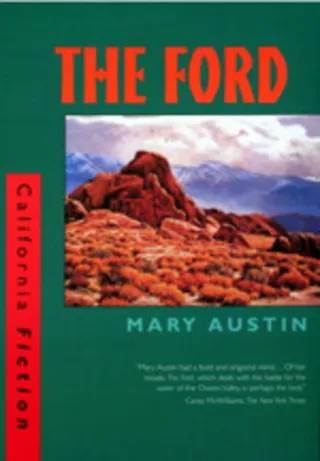
Mary Austin (1868-1934) was an American novelist, essayist, and nature writer. She is best known for The Land of Little Rain, as well as The Flock and The Ford, and wrote extensively about the American Southwest.The conditions of the writer's period are important to an understanding of the work. Questions about the individual and society, including the roles of education, work, belief, and public institutions, repeatedly enter the literature and intellectual debates of the era. The historical setting should not be confused with a modern retelling: the language and assumptions of these works belong to their original moment.Austin moved west as a young woman and came to know the arid regions of California and Nevada closely. Her writing was shaped by observation of desert ecology, Indigenous communities, settlement, and the tensions between human expectations and the land's realities. The Land of Little Rain, published in 1903, consists of connected descriptive essays rather than a conventional narrative journey. Its prose gives sustained attention to the forms of life that survive in conditions outsiders sometimes dismiss as empty or barren. Austin later wrote fiction and essays, including The Flock and The Ford, while participating in conversations about regional identity and art in the American Southwest. Her work has also been examined critically for the ways it represents Native peoples and settler perspectives. She is remembered as an important early literary interpreter of arid landscapes whose attention to place helped expand the subjects of American nature writing.In The Land of Little Rain, the writer turns to nature writing and literary essays to develop a particular subject. Her linked essays blend vivid natural history with reflection on place. Its achievement is best understood in connection with the author's established body of writing and the literary conventions through which the subject is presented.Readers approaching this work today can appreciate its historical frame alongside its literary ambitions. Its treatment of character, perspective, society, or argument offers insight into the concerns that shaped its original audience. Where names, dates, or the original author's identity are uncertain, those details should be resolved through the edition and bibliographical record rather than supplied by conjecture.
More by Mary Austin





Why Readwise Books?
Readwise Books is an ebook & audiobook platform that automatically logs how much you and your friends read, making it fun and easy to read more. Learn more →