Report an issue
Tell us what's wrong and we'll take a look.
Thanks – we got it. We'll review and follow up if needed.
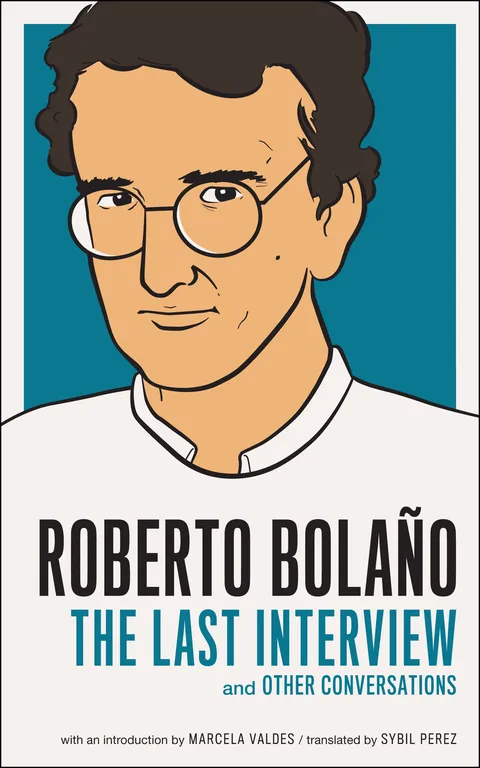
With the release of Roberto Bolaño’s The Savage Detectives in 1998, journalist Monica Maristain discovered a writer “capable of befriending his readers.” After exchanging several letters with Bolaño, Maristain formed a friendship of her own, culminating in an extensive interview with the novelist about truth and consequences, an interview that turned out to be Bolaño’s last.
Appearing for the first time in English, Bolaño’s final interview is accompanied by a collection of conversations with reporters stationed throughout Latin America, providing a rich context for the work of the writer who, according to essayist Marcela Valdes, is “a T.S. Eliot or Virginia Woolf of Latin American letters.” As in all of Bolaño’s work, there is also wide-ranging discussion of the author’s many literary influences. (Explanatory notes on authors and titles that may be unfamiliar to English-language readers are included here.)
The interviews, all of which were completed during the writing of the gigantic 2666, also address Bolaño’s deepest personal concerns, from his domestic life and two young children to the realities of a fatal disease.
Roberto Bolaño
Roberto Bolaño was born in Santiago, Chile, in 1953. He grew up in Chile and Mexico City, where he was a founder of the Infrarealist poetry movement. His first full-length novel, The Savage Detectives, received the Herralde Prize and the Rómulo Gallegos Prize when it appeared in 1998. Roberto Bolaño died in Blanes, Spain, at the age of fifty.
More by Roberto Bolaño


Why Readwise Books?
Readwise Books is an ebook & audiobook platform that automatically logs how much you and your friends read, making it fun and easy to read more. Learn more →