Report an issue
Tell us what's wrong and we'll take a look.
Thanks – we got it. We'll review and follow up if needed.
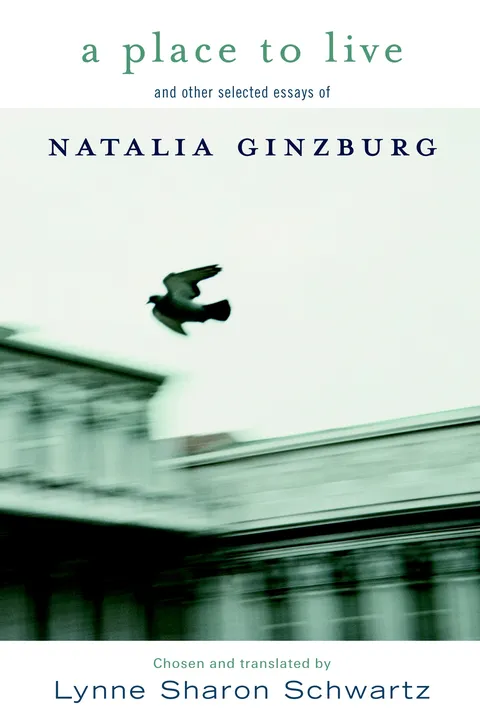
Arguably one of Italy’s greatest contemporary writers, Natalia Ginzburg has been best known in America as a writer’s writer, quiet beloved of her fellow wordsmiths. This collection of personal essays chosen by the eminent American writer Lynne Sharon Schwartz from four of Ginzburg’s books written over the course of Ginzburg’s lifetime was a many-years long project for Schwartz. These essays are deeply felt, but also disarmingly accessible. Full of self-doubt and searing insight, Ginzburg is merciless in her attempts to describe herself and her world—and yet paradoxically, her self-deprecating remarks reveal her deeper confidence in her own eye and writing ability, as well as the weight and nuance of her exploration of the conflict between humane values and bureaucratic rigidity.
Natalia Ginzburg
Natalia Ginzburg (1916-1991) was born Natalia Levi in Palermo, Sicily, the daughter of a Jewish biologist father and a Catholic mother. She grew up in Turin, in a household that was a salon for antifascist activists, intellectuals, and artists, and published her first short stories at the age of eighteen; she would go on to become one of the most important and widely taught writers in Italy, taking up the themes of oppression, family, and social change. In 1938, she married Leone Ginzburg, a prominent Turinese writer, activist, and editor. In 1940, the fascist government exiled the Ginzburgs and their three children to a remote village in Abruzzo. After the fall of Mussolini, Leone fled to Rome, where he was arrested by Nazi authorities and tortured to death. Natalia married Gabriele Baldini, an English professor, in 1950, and spent the next three decades in Rome, London, and Turin, writing dozens of novels, plays, and essays. Lessico famigliare (Family Lexicon) won her the prestigious Strega Prize in 1963 and La famiglia Manzoni was awarded the 1984 Bagutta Prize. From 1983 to 1987, she served in the Italian parliament as an Independent (having left the Communist Party), where she dedicated herself to reformist causes, including food prices and Palestinian rights.
More by Natalia Ginzburg





Lynne Sharon Schwartz
Translated by
Lynne Sharon Schwartz (b. 1939) is a celebrated author of novels, poems, short fiction, and criticism. Schwartz began her career with a series of short stories before publishing her first novel, the National Book Award–nominated Rough Strife (1980). She went on to publish works of memoir, poetry, and translation. Her other novels have included the award-nominated Leaving Brooklyn (1989) and Disturbances in the Field (1983). Her short fiction has appeared in theBest American Short Stories annual anthology series several times. In addition, her reviews and criticism have appeared in numerous magazines and newspapers. Schwartz lives in New York City, and is currently a faculty member of the Bennington Writing Seminars.


Why Readwise Books?
Readwise Books is an ebook & audiobook platform that automatically logs how much you and your friends read, making it fun and easy to read more. Learn more →