Report an issue
Tell us what's wrong and we'll take a look.
Thanks – we got it. We'll review and follow up if needed.
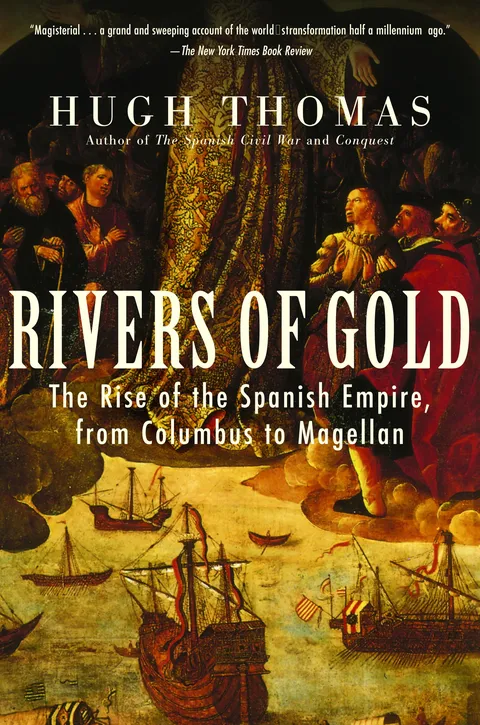
From one of the greatest historians of the Spanish world, here is a fresh and fascinating account of Spain’s early conquests in the Americas. Hugh Thomas’s magisterial narrative of Spain in the New World has all the characteristics of great historical literature: amazing discoveries, ambition, greed, religious fanaticism, court intrigue, and a battle for the soul of humankind.
Hugh Thomas shows Spain at the dawn of the sixteenth century as a world power on the brink of greatness. Her monarchs, Fernando and Isabel, had retaken Granada from Islam, thereby completing restoration of the entire Iberian peninsula to Catholic rule. Flush with success, they agreed to sponsor an obscure Genoese sailor’s plan to sail west to the Indies, where, legend purported, gold and spices flowed as if they were rivers. For Spain and for the world, this decision to send Christopher Columbus west was epochal—the dividing line between the medieval and the modern.
Spain’s colonial adventures began inauspiciously: Columbus’s meagerly funded expedition cost less than a Spanish princess’s recent wedding. In spite of its small scale, it was a mission of astounding scope: to claim for Spain all the wealth of the Indies. The gold alone, thought Columbus, would fund a grand Crusade to reunite Christendom with its holy city, Jerusalem.
The lofty aspirations of the first explorers died hard, as the pursuit of wealth and glory competed with the pursuit of pious impulses. The adventurers from Spain were also, of course, curious about geographical mysteries, and they had a remarkable loyalty to their country. But rather than bridging earth and heaven, Spain’s many conquests bore a bitter fruit. In their search for gold, Spaniards enslaved “Indians” from the Bahamas and the South American mainland. The eloquent protests of Bartolomé de las Casas, here much discussed, began almost immediately. Columbus and other Spanish explorers—Cortés, Ponce de León, and Magellan among them—created an empire for Spain of unsurpassed size and scope. But the door was soon open for other powers, enemies of Spain, to stake their claims.
Great men and women dominate these pages: cardinals and bishops, priors and sailors, landowners and warriors, princes and priests, noblemen and their determined wives.
Rivers of Gold is a great story brilliantly told. More significant, it is an engrossing history with many profound—often disturbing—echoes in the present.
Hugh Thomas
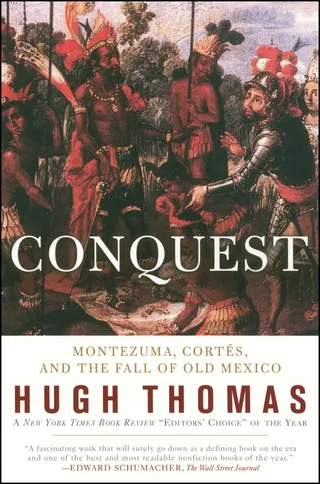
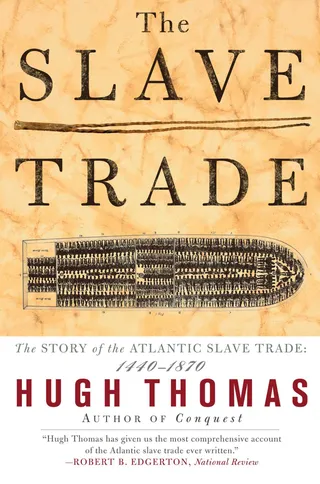
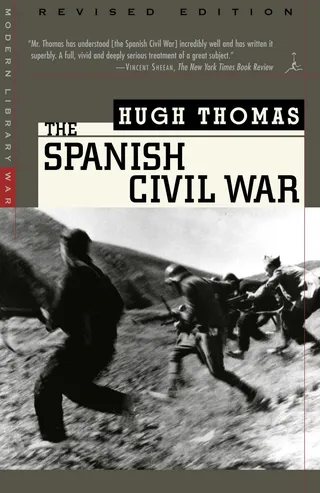
Hugh Thomas is the award-winning author of numerous books, including The Spanish Civil War, Rivers of Gold, and The Slave Trade: The History of the Atlantic Slave Trade 1440-1870. He won the Somerset Maugham Award and the Arts Council Prize for History, as well as receiving the Calvo Serer prize in Spain and the Boccacio and Nonino prizes in Italy. He was made a Commandeur de l'Ordre des Arts et des Lettres in France and a lord in England. He was educated at Queens' College, Cambridge, and the Sorbonne. Hugh lives in London.
More by Hugh Thomas










Why Readwise Books?
Readwise Books is an ebook & audiobook platform that automatically logs how much you and your friends read, making it fun and easy to read more. Learn more →