Report an issue
Tell us what's wrong and we'll take a look.
Thanks – we got it. We'll review and follow up if needed.
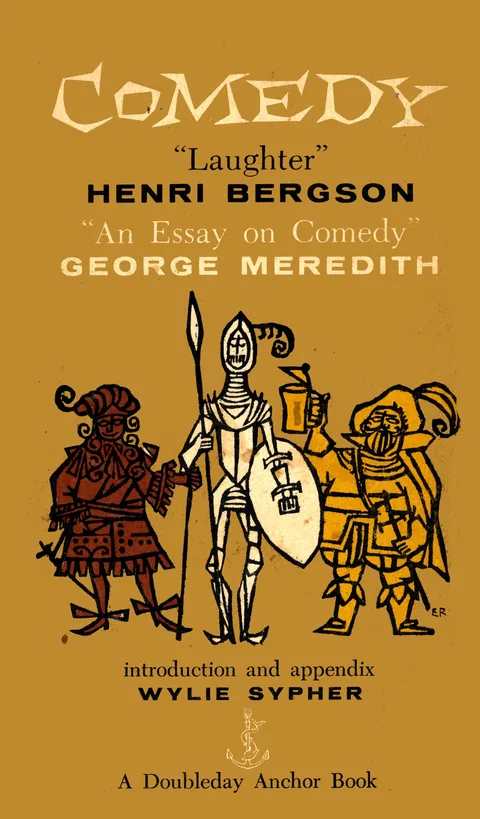
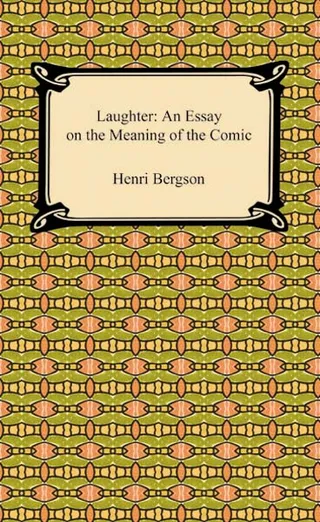
Henri Bergson — Laughter
George Meredith — An Essay on Comedy
Introduction & Appendix on The Meanings of Comedy by Wylie Sypher
Laughter is a mystery—a mystery which defines man. Brought together in this volume are two classic studies of the nature of laughter and comedy. The great French philosopher Henri Bergson develops, in "Laughter," a profound psychological and philisophic theory of the main springs of comedy—a theory closely related to the doctrine of the élan vital. In his "Essay on Comedy," the English novelist George Meredith discusses the varieties of the comic experience and the social and moral function of comedy.
Together these two major theories go far toward clarifying the mystery of laughter. Wylie Sypher, in his richly documented supplementary essay, places the views of Bergson and Meredith in a large context of speculation on the nature of comedy. The essay reviews important statements of such thinkers as Aristotle, Hobbes, Baudelaire, Freud, Cornford, and others. It serves to give further significance to Bergson and Meredith and to the meaning of comedy itself.
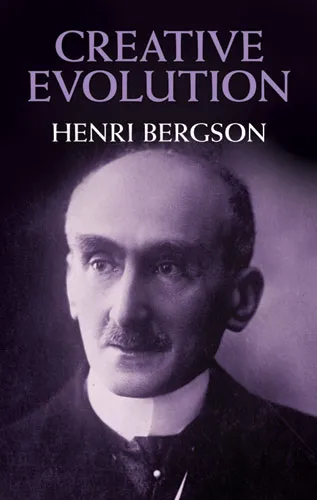
Henri Bergson
Henri-Louis Bergson (18 October 1859–4 January 1941) was a French philosopher influential in the first half of the 20th century. He believed that for a true understanding of reality the processes of immediate experience combined with intuition play a larger role than rationalism and science. In 1927 he received the Nobel Prize in Literature “in recognition of his rich and vitalizing ideas and the brilliant skill with which they have been presented”. In 1930, he received France’s highest honor: the Grand-Croix de la Legion d’honneur.
More by Henri Bergson

















Why Readwise Books?
Readwise Books is an ebook & audiobook platform that automatically logs how much you and your friends read, making it fun and easy to read more. Learn more →