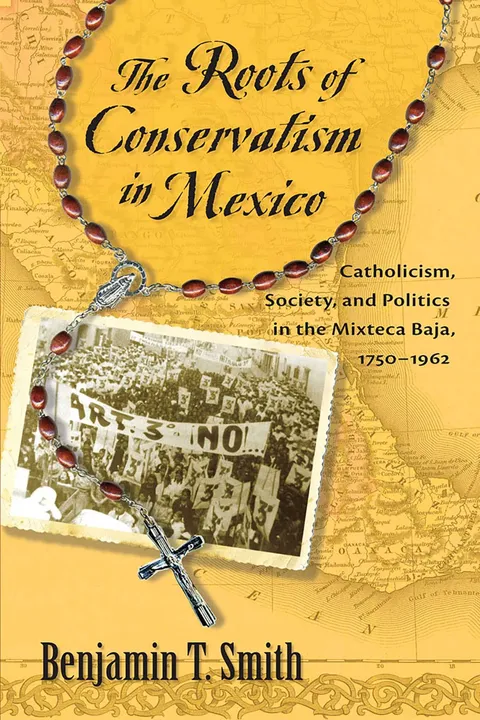
The Roots of Conservatism in Mexico
Catholicism, Society, and Politics in the Mixteca Baja, 1750-1962
Report an issue
Tell us what's wrong and we'll take a look.
Thanks – we got it. We'll review and follow up if needed.
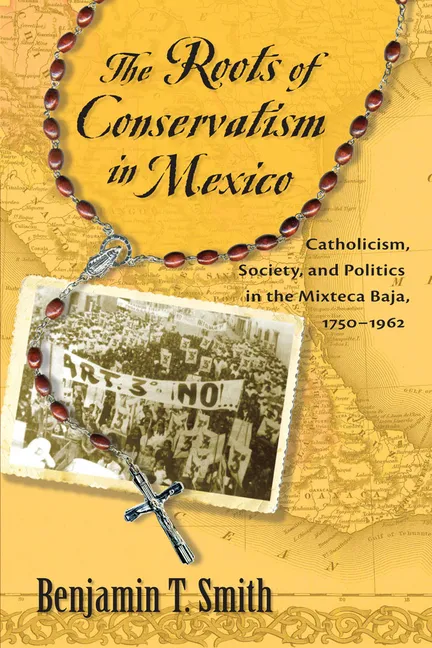
The Roots of Conservatism is the first attempt to ask why over the past two centuries so many Mexican peasants have opted to ally with conservative groups rather than their radical counterparts. Blending socioeconomic history, cultural analysis, and political narrative, Smith’s study begins with the late Bourbon period and moves through the early republic, the mid-nineteenth-century Reforma, the Porfiriato, and the Revolution, when the Mixtecs rejected Zapatista offers of land distribution, ending with the armed religious uprising known as the “last Cristiada,” a desperate Cold War bid to rid the region of impious “communist” governance. In recounting this long tradition of regional conservatism, Smith emphasizes the influence of religious belief, church ritual, and lay-clerical relations both on social relations and on political affiliation. He posits that many Mexican peasants embraced provincial conservatism, a variant of elite or metropolitan conservatism, which not only comprised ideas on property, hierarchy, and the state, but also the overwhelming import of the church to maintaining this system.
Benjamin T. Smith
Benjamin T. Smith is a professor of Latin American history at the University of Warwick. His works include The Dope: The Real History of the Mexican Drug Trade; The Mexican Press and Civil Society, 1940–1976: Stories from the Newsroom, Stories from the Street; and The Roots of Conservatism in Mexico: Catholicism, Society, and Politics in the Mixteca Baja, 1750–1962 (UNM Press).
More by Benjamin T. Smith




Why Readwise Books?
Readwise Books is an ebook & audiobook platform that automatically logs how much you and your friends read, making it fun and easy to read more. Learn more →