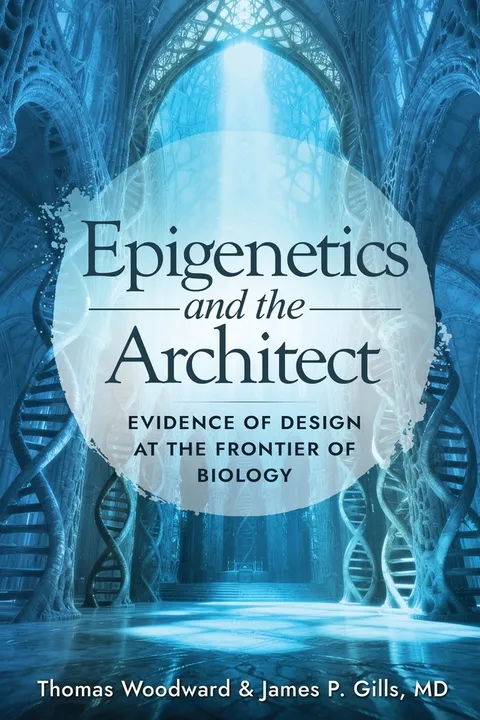
Epigenetics and the Architect
Evidence of Design at the Frontier of Biology
Report an issue
Tell us what's wrong and we'll take a look.
Thanks – we got it. We'll review and follow up if needed.
In 1953 Watson and Crick ignited the genetics revolution with their discovery of the double helix. Today a second revolution is underway thanks to the discovery of DNA's mysterious partner in the elegant waltz of cellular life-the epigenome. The sophistication of that dance is astonishing researchers and upending the genetic paradigm. Epigenetics and the Architect explores the latest in this unfolding revolution but goes a step further than other recent introductions to the subject. Evolutionary theory holds that all life diversified through a series of random mutations to DNA, but we now know that much of the information employed to build biological form is situated in epigenetic architecture beyond the reach of random genetic mutations and natural selection. As authors Thomas Woodward and James Gills show, this and the sheer intricacy of the genome/epigenome system are reinvigorating an ancient idea-that living things look designed because they are.
Thomas Woodward
Thomas Woodward (Ph.D., University of South Florida) is a professor at Trinity College of Florida, where he teaches the history of science, communication, and systematic theology. He is founder and director of the C. S. Lewis Society and lectures in universities on scientific, apologetic, and religious topics. The author of the award-winning Doubts about Darwin, Woodward is an avid astronomer and has been published in Christianity Today and other periodicals.
More by Thomas Woodward










Why Readwise Books?
Readwise Books is an ebook & audiobook platform that automatically logs how much you and your friends read, making it fun and easy to read more. Learn more →