Report an issue
Tell us what's wrong and we'll take a look.
Thanks – we got it. We'll review and follow up if needed.
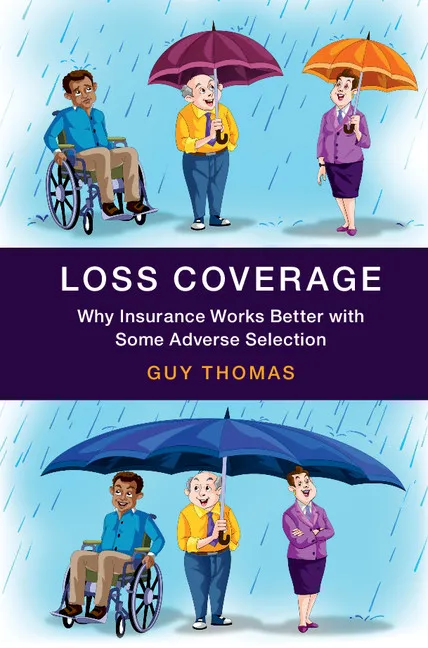
Most academic and policy commentary represents adverse selection as a severe problem in insurance, which should always be deprecated, avoided or minimised. This book gives a contrary view. It details the exaggeration of adverse selection in insurers' rhetoric and insurance economics, and presents evidence that in many insurance markets, adverse selection is weaker than most commentators suggest. A novel arithmetical argument shows that from a public policy perspective, 'weak' adverse selection can be a good thing. This is because a degree of adverse selection is needed to maximise 'loss coverage', the expected fraction of the population's losses which is compensated by insurance. This book will be valuable for those interested in public policy arguments about insurance and discrimination: academics (in economics, law and social policy), policymakers, actuaries, underwriters, disability activists, geneticists and other medical professionals.
Guy Thomas
Guy Thomas has been an independent investor since 1999. In his previous life as an employee, he was a research actuary with a firm of pension consultants, and then a university lecturer. He has published papers in academic journals covering insurance economics, actuarial mathematics, and taxation and investment. He is an honorary lecturer at the University of Kent.
More by Guy Thomas


Why Readwise Books?
Readwise Books is an ebook & audiobook platform that automatically logs how much you and your friends read, making it fun and easy to read more. Learn more →