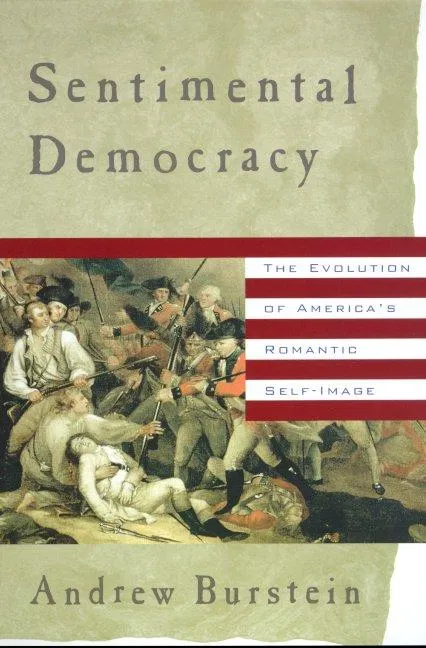
Sentimental Democracy
Report an issue
Tell us what's wrong and we'll take a look.
Thanks – we got it. We'll review and follow up if needed.
The provocative interpretation of American political rhetoric
Americans like to use words of sentiment and sympathy, passion and power, to explain their democracy. In a provocative new work, Andrew Burstein examines the metaphorically rich language which Americans developed to express their guiding principle: that the New World would improve upon the Old. In journals, letters, speeches, and books, an impassioned rhetoric of "feeling" set the tone for American patriotism.
Burstein shows how the eighteenth century "culture of sensibility" encouraged optimism about a global society: the new nation would succeed. Americans believed, as much by sublime feeling as by intellectual achievement or political liberty. As they grew more self-confident, this pacific ideal acquired teeth: noble Washington and humane Jefferson yielded to boisterous Jackson, and the language of gentle feeling to the force of Manifest Destiny. Yet Americans never stopped celebrating what they believed was their innate impulse to do good.
Andrew Burstein
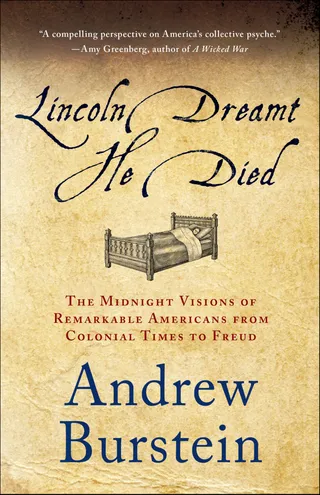
Andrew Burstein is the Charles P. Manship professor of history at Louisiana State University and the author, most recently of Democracy's Muse. He has written numerous history books and biographies including Lincoln Dreamt He Died and Jefferson's Secrets. Best known as a Jefferson scholar, Professor Burstein has taught courses at LSU for many years as well as others universities. He received an MA from the Center for Chinese Studies at the University of Michigan and a PhD in history from the University of Virginia.
More by Andrew Burstein








Why Readwise Books?
Readwise Books is an ebook & audiobook platform that automatically logs how much you and your friends read, making it fun and easy to read more. Learn more →