Report an issue
Tell us what's wrong and we'll take a look.
Thanks – we got it. We'll review and follow up if needed.
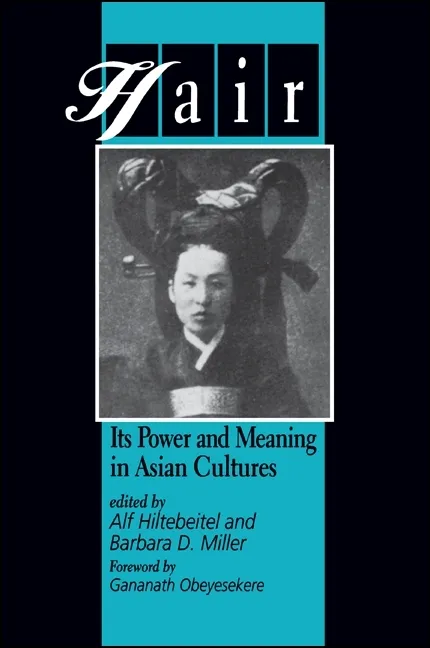
An interdisciplinary exploration of the meanings of hair in Asia from classical times to contemporary contexts.
Hair-whether present or absent, restored or removed, abundant or scarce, long or short, bound or unbound, colored or natural-marks a person as clearly as speech, clothing, and smell. It defines a person's gender, sexual availability and desirability, age, social status, and even political stance. It may also act as a basis for discrimination in treatment by others. While hair's high salience as both sign and symbol extends cross-culturally through time, its denotations are far from universal. Hair is an interdisciplinary look at the meanings of hair, hairiness, and hairlessness in Asian cultures, from classical to contemporary contexts.
The contributors draw on a variety of literary, archaeological, religious, and ethnographic evidence. They examine scientific, medical, political, and popular cultural discourses. Topics covered include monastic communities and communities of fashion, hair codes and social conventions of rank, attitudes of enforcement and rebellion, and positions of privilege and destitution. Different interpretations include hair as a key aspect of female beauty, of virility, as obscene, as impure, and linked with other symbolic markers in bodily, social, political, and cosmological constructs.
Alf Hiltebeitel
ALF HILTEBEITEL is Professor of Religion and Director of the Human Sciences Program at George Washington University. His books include Rethinking India's Oral and Classical Epics: Draupad.


Why Readwise Books?
Readwise Books is an ebook & audiobook platform that automatically logs how much you and your friends read, making it fun and easy to read more. Learn more →