Report an issue
Tell us what's wrong and we'll take a look.
Thanks – we got it. We'll review and follow up if needed.
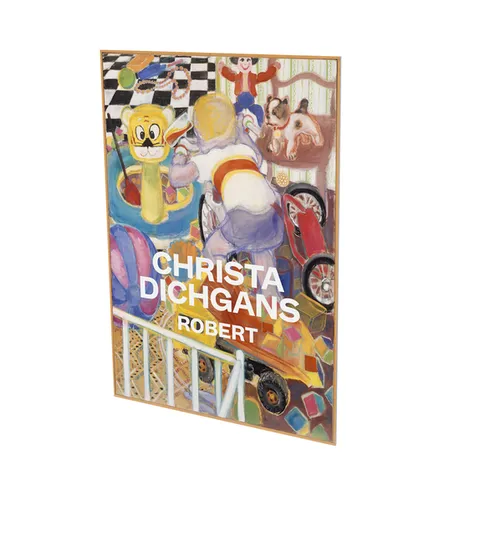
Christa Dichgans lived in a male-dominated world: her first marriage to Karl Horst Hö dicke was followed 1972 by a marriage to the renowned Galerist Rudolf Springer in Berlin. She had friendship with Markus Lü pertz and A. R. Penck, and she assisted Georg Baselitz during his professorhip in the 1980s at Berlin's Academy of Fine Arts. The German » painter princes, « as they were later known, artists who over the course of their careers became important figures in Germany and taught figurative expression to the younger generation of the Junge Wilde (Youg Wild Ones), were indispensable dialogue partners for Christa Dichgans. The artist described her role at the time thusly: » In the 1960s, no man felt threatened by me. Men thought I was pretty and spooky, but they didn't really take my art seriously.« Her early works, which were long consigned to the shadows, already bore the germ of a pictorial formula that was to make the artist one of Germany's most important Pop art figures and in no way inferior to Capitalist Realists such as Sigmar Polke, Gerhad Richter, Konrad Lueg, and Manfred Kuttner.


Why Readwise Books?
Readwise Books is an ebook & audiobook platform that automatically logs how much you and your friends read, making it fun and easy to read more. Learn more →