A Review of the Potential Effects of Climate Change on Quaking Aspen (Populus tremuloides) in the Western United States and a New Tool for Surveying Sudden Aspen Decline
Report an issue
Tell us what's wrong and we'll take a look.
Thanks – we got it. We'll review and follow up if needed.
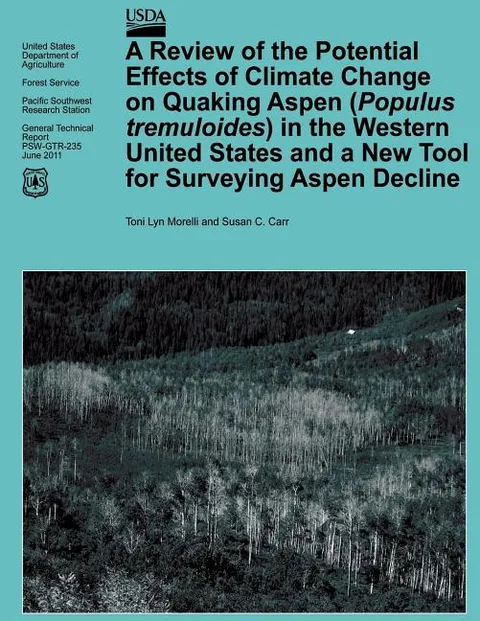
We conducted a literature review of the effects of climate on the distribution and growth of quaking aspen (Populus tremuloides Michx.) in the Western United States. Based on our review, we summarize models of historical climate determinants of contemporary aspen distribution. Most quantitative climate-based models linked aspen presence and growth to moisture availability and solar radiation. We describe research results pertaining to global climate change effects on aspen distribution and vigor. In addition, we present potential interactive effects related to climate change and natural disturbances and insect and pathogen outbreaks. Finally, we review the phenomenon of sudden aspen decline in western North America, which has been linked to drought and may be exacerbated by future climate change. Overall, research indicates a complex, unpredictable future for aspen in the West, where increased drought, ozone, and insect outbreaks will vie with carbon dioxide fertilization and warmer soils, resulting in unknown cumulative effects. Considering its positive moisture influence on the landscape, its economic impact, and its many benefits to the resilience of wildlife in terms of habitat and forage, aspen is a valuable, yet vulnerable, species in the face of global warming.


Why Readwise Books?
Readwise Books is an ebook & audiobook platform that automatically logs how much you and your friends read, making it fun and easy to read more. Learn more →