Report an issue
Tell us what's wrong and we'll take a look.
Thanks – we got it. We'll review and follow up if needed.
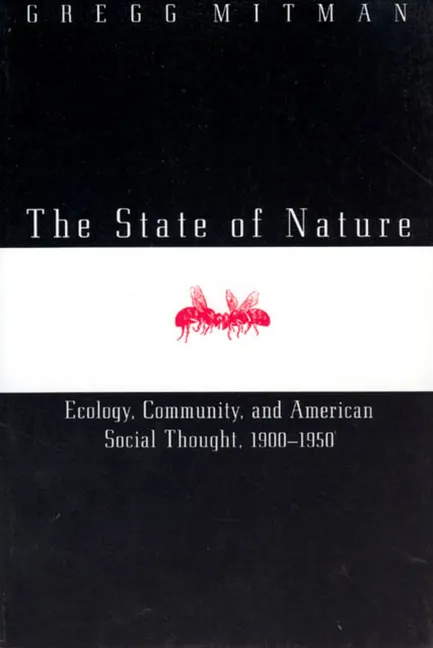
Reacting against the view of nature "red in tooth and claw," ecologists and behavioral biologists such as Warder Clyde Allee, Alfred Emerson, and their colleagues developed research programs they hoped would validate and promote an image of human society as essentially cooperative rather than competitive. Mitman argues that Allee's religious training and pacifist convictions shaped his pioneering studies of animal communities in a way that could be generalized to denounce the view that war is in our genes.
Gregg Mitman
Gregg Mitman is the Vilas Research and William Coleman Professor of history of science, medical history, and environmental studies at the University of Wisconsin-Madison. He is an award-winning author, filmmaker, and teacher, whose interests span the history of science, medicine, and the environment in the United States and the world, and reflect a commitment to environmental and social justice. His recent works include Documenting the World: Film, Photography, and the Scientific Record (University of Chicago Press, 2016), Breathing Space: How Allergies Shape our Lives and Landscapes (Yale University Press, 2007), and Reel Nature: America's Romance with Wildlife on Film, rev. ed. (University of Washington Press, 2009).
More by Gregg Mitman


Why Readwise Books?
Readwise Books is an ebook & audiobook platform that automatically logs how much you and your friends read, making it fun and easy to read more. Learn more →