Report an issue
Tell us what's wrong and we'll take a look.
Thanks – we got it. We'll review and follow up if needed.
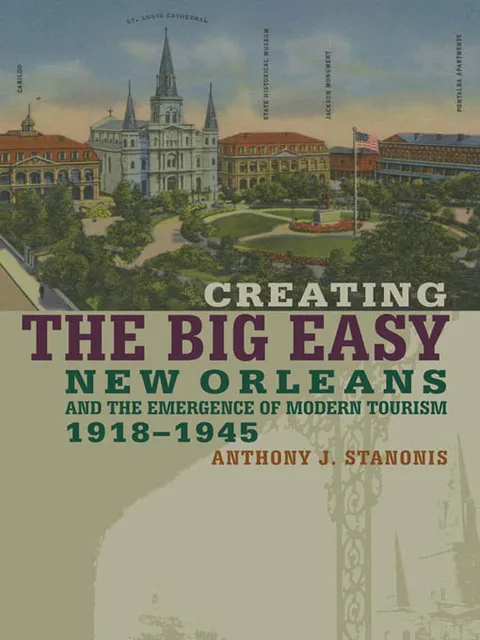
Between the World Wars, New Orleans transformed its image from that of a corrupt and sullied port of call into that of a national tourist destination. Anthony J. Stanonis tells how boosters and politicians reinvented the city to build a modern mass tourism industry and, along the way, fundamentally changed the city's cultural, economic, racial, and gender structure.
Stanonis looks at the importance of urban development, historic preservation, taxation strategies, and convention marketing to New Orleans' makeover and chronicles the city's efforts to domesticate its jazz scene, "democratize" Mardi Gras, and stereotype local blacks into docile, servile roles. He also looks at depictions of the city in literature and film and gauges the impact on New Orleans of white middle-class America's growing prosperity, mobility, leisure time, and tolerance of women in public spaces once considered off-limits.
Visitors go to New Orleans with expectations rooted in the city's "past": to revel with Mardi Gras maskers, soak up the romance of the French Quarter, and indulge in rich cuisine and hot music. Such a past has a basis in history, says Stanonis, but it has been carefully excised from its gritty context and scrubbed clean for mass consumption.
Anthony J Stanonis
Anthony J. Stanonis is a New Orleans native and independent historian. He received his BA in history from Loyola University New Orleans and his MA and PhD in history from Vanderbilt University. His publications concentrate on tourism, foodways, and culture in the American South.
More by Anthony J Stanonis


Why Readwise Books?
Readwise Books is an ebook & audiobook platform that automatically logs how much you and your friends read, making it fun and easy to read more. Learn more →