Report an issue
Tell us what's wrong and we'll take a look.
Thanks – we got it. We'll review and follow up if needed.
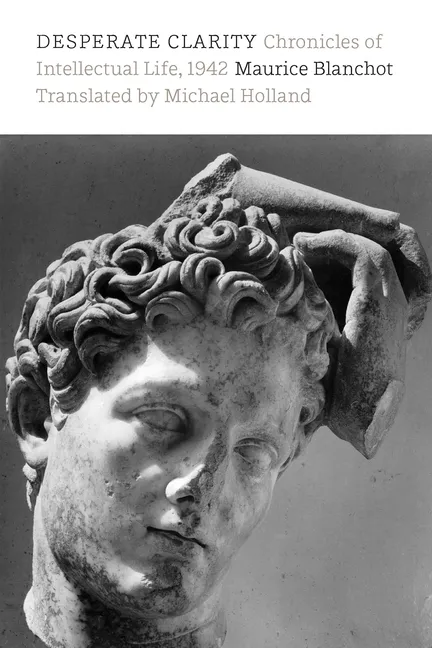
These articles gradually outline a practical project that both looks back to the radical artistic doctrines of the late nineteenth and early twentieth centuries and anticipates the most original developments in the postwar era, among writers such as Robbe-Grillet, Butor, Sarraute, and Duras, not to mention Blanchot himself. In addition Blanchot is receptive in his weekly column to the extraordinarily wide range of original writing and thinking that was produced during the dark years of occupation, in areas such as psychology, anthropology, ancient history, linguistics, and philosophy. A highly original doctrine of writing can be seen to develop in which, thanks to the desperate clarity with which Blanchot's mind accepts and advances into what he sees as absolute and irrevocable disaster, thought is carefully and systematically deflected away from any sort of nihilism, thanks to a new relationship between reason, with its unitary subject, and the otherness to which imagination offers access.
Maurice Blanchot
Maurice Blanchot (1907-2003) was a French writer, philosopher, and literary theorist. His work had a strong influence on later post-structuralist theorists such as Jacques Derrida. He is one of the most enigmatic and influential figures in modern French writing yet no interview, no biographical sketch, and hardly any photographs have ever been published of him.
More by Maurice Blanchot


Why Readwise Books?
Readwise Books is an ebook & audiobook platform that automatically logs how much you and your friends read, making it fun and easy to read more. Learn more →