
Report an issue
Tell us what's wrong and we'll take a look.
Thanks – we got it. We'll review and follow up if needed.

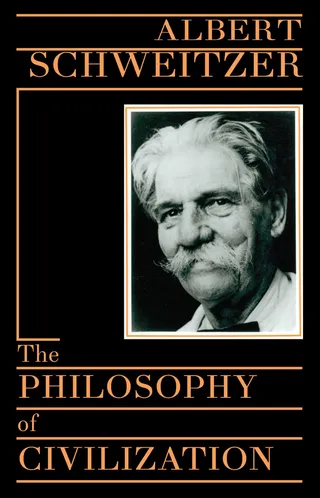
In "Civilization and Ethics: The Philosophy of Civilization, Part II", Albert Schweitzer presents a profound and enduring investigation into the moral foundations of human society. As the second volume of his major philosophical project, this work explores the causes of the decline of Western civilization and proposes a revolutionary ethical solution. Schweitzer argues that the survival of humanity depends on a fundamental shift in our worldview, centered on the principle of Reverence for Life.
Throughout the text, Schweitzer critiques the historical developments of ethics from ancient times to the modern era, identifying a lack of life-affirming spiritual energy in contemporary thought. He suggests that true progress is not merely technological or material, but essentially ethical. By valuing all living beings and recognizing the interconnectedness of existence, Schweitzer offers a path toward a sustainable and meaningful civilization.
This masterwork remains a cornerstone of 20th-century thought, reflecting the author's unique perspective as a physician, theologian, and humanitarian. "Civilization and Ethics" serves as an urgent call to action, encouraging readers to cultivate a conscious sense of responsibility toward the world. It is an essential read for anyone interested in moral philosophy, social theory, and the legacy of one of history's most celebrated humanitarians.
This work has been selected by scholars as being culturally important, and is part of the knowledge base of civilization as we know it. This work was reproduced from the original artifact, and remains as true to the original work as possible. Therefore, you may see the original copyright references, library stamps (as most of these works have been housed in our most important libraries around the world), and other notations in the work.
This work is in the public domain in the United States of America, and possibly other nations. Within the United States, you may freely copy and distribute this work, as no entity (individual or corporate) has a copyright on the body of the work.
As a reproduction of a historical artifact, this work may contain missing or blurred pages, poor pictures, errant marks, etc. Scholars believe, and we concur, that this work is important enough to be preserved, reproduced, and made generally available to the public. We appreciate your support of the preservation process, and thank you for being an important part of keeping this knowledge alive and relevant.
Albert Schweitzer
Albert Schweitzer, OM (14 January 1875 – 4 September 1965) was a German—and later French—theologian, organist, philosopher, physician, and medical missionary in Africa, also known for his interpretive life of Jesus. He was born in the province of Alsace-Lorraine, at that time part of the German Empire. He considered himself French and wrote in French. Schweitzer, a Lutheran, challenged both the secular view of Jesus as depicted by historical-critical methodology current at his time in certain academic circles, as well as the traditional Christian view. He received the 1952 Nobel Peace Prize for his philosophy of “Reverence for Life”, expressed in many ways, but most famously in founding and sustaining the Albert Schweitzer Hospital in Lambaréné, now in Gabon, west central Africa (then French Equatorial Africa). As a music scholar and organist, he studied the music of German composer Johann Sebastian Bach and influenced the Organ reform movement (Orgelbewegung).
More by Albert Schweitzer











Why Readwise Books?
Readwise Books is an ebook & audiobook platform that automatically logs how much you and your friends read, making it fun and easy to read more. Learn more →