Report an issue
Tell us what's wrong and we'll take a look.
Thanks – we got it. We'll review and follow up if needed.
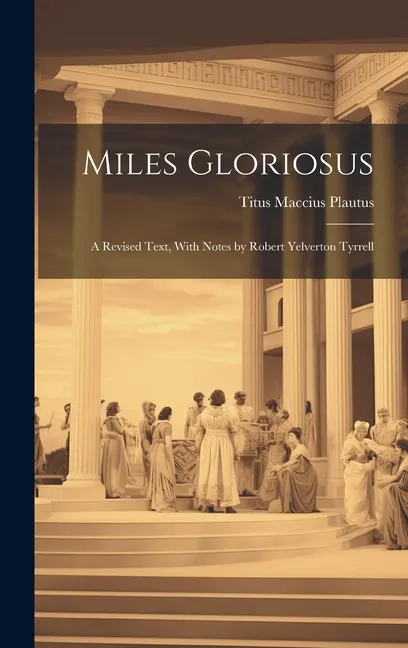
A revised edition of Miles Gloriosus, Plautus's classic Roman comedy of errors. This edition includes extensive notes by Robert Yelverton Tyrrell, providing valuable context and analysis of the play's themes and historical background.
This work has been selected by scholars as being culturally important, and is part of the knowledge base of civilization as we know it.
This work is in the "public domain in the United States of America, and possibly other nations. Within the United States, you may freely copy and distribute this work, as no entity (individual or corporate) has a copyright on the body of the work.
Scholars believe, and we concur, that this work is important enough to be preserved, reproduced, and made generally available to the public. We appreciate your support of the preservation process, and thank you for being an important part of keeping this knowledge alive and relevant.
Titus Maccius Plautus
Plautus, Titus Maccius (254-184 BC) was a Roman playwright, whose comedies were the most popular dramatic works of their day. He was originally an actor or clown. Twenty-one of his 130 plays survive, revealing his theatrical craftsmanship and total mastery of farce. Although his works were palliata, adaptations of Greek new comedy originals now lost, he shifted the scene to Rome and based much of the humour on Roman manners and customs. His comedy, which was broader than that of Terence, still works today. Stock characters of Plautus's plays include the bragging soldier, the miser, the old man in love, the parasite, identical twins, the wily slave, and the courtesan. Later European dramatists influenced by Plautus include Shakespeare, Jonson, Dryden, and Molière. His comedy was often based on disguises and mistaken identities; Shakespeare's The Comedy of Errors (1592) was based on Plautus's Menaechmi, about the confusions caused by a pair of long-separated identical twins. Several of his plays were combined for Stephen Sondheim's 1962 Broadway musical A Funny Thing Happened on the Way to the Forum (although only one line from Plautus was retained: "I am a parade"). Plautus was eventually forced to work in a grain mill after losing most of his theatrical earnings in unsuccessful business ventures.
More by Titus Maccius Plautus



Why Readwise Books?
Readwise Books is an ebook & audiobook platform that automatically logs how much you and your friends read, making it fun and easy to read more. Learn more →