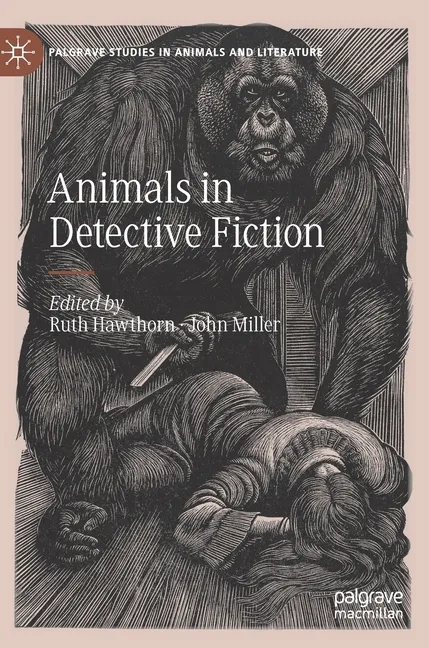
Animals in Detective Fiction
Report an issue
Tell us what's wrong and we'll take a look.
Thanks – we got it. We'll review and follow up if needed.
This book explores the vast array of animals that populate detective fiction. If the genre begins, as is widely supposed, with Edgar Allan Poe's "Murders in the Rue Morgue" (1841), then detective fiction's very first culprit is an animal. Animals, moreover, consistently appear as victims, clues, and companions, while the abstract conception of animality is closely tied to the idea of criminality. Although it is often described as an essentially conservative form, detective fiction can unsettle the binary of human and animal to intersect with developing concerns in animal studies: animal agency, the ethical complexities of human/animal interaction, the politics and literary aesthetics of violence, and animal metaphor. Gathering its 14 essays into sections on ontologies, ethics, politics, and forms, Animals in Detective Fiction provides a compelling and nuanced analysis of the central role creatures play in this enduringly popular and continually morphing literary form.
John Miller
William Lane, sometimes known as John Miller, was an English-born journalist, author, supporter of Australian labor politics, and utopian socialist theorist. Lane was born into a poor household in Bristol, England. After excelling in school, he moved to Canada, first as a linotype operator, then as a reporter for the Detroit Free Press, where he met his future wife Ann Lane, née Macquire. He got active in the Australian labor movement after relocating in Australia with his wife and child, as well as his brother John, creating the Australian Labour Federation and becoming a prolific journalist for the movement. He wrote about labor rights and white nationalism, among other things.


Why Readwise Books?
Readwise Books is an ebook & audiobook platform that automatically logs how much you and your friends read, making it fun and easy to read more. Learn more →