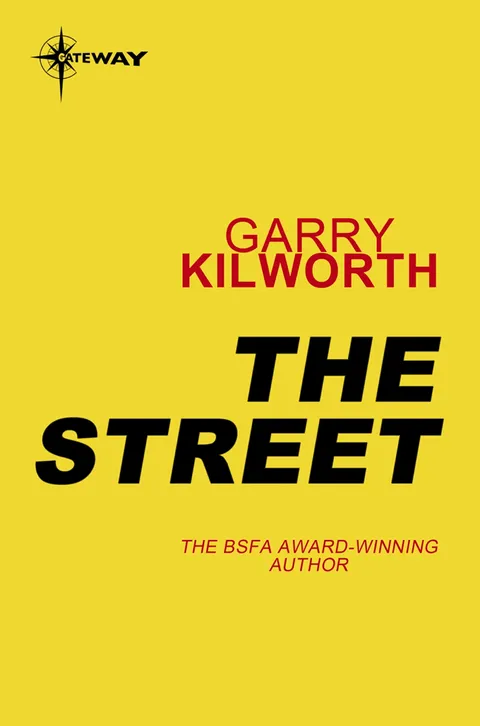
The Street
Report an issue
Tell us what's wrong and we'll take a look.
Thanks – we got it. We'll review and follow up if needed.
The roads that made up the new Diamond Estate were all named after gems. There was Emerald Avenue, Ruby Close, Garnet Crescent . . . and Bloodstone Street.
It started on the day the Peters family moved in. Patty was lying in the road and when her farther made her get up her body left a damp imprint on the asphalt.
"Look, Daddy," she said, "the street is crying."
But within days the tarmac was bubbling with a malevolent will of its own, sucking at the feet of unwary pedestrians, chopping at the arms of maintenance workers and redirecting the wheels of speeding cars.
The residents of Bloodstone Street had moved into open plan suburbia - only to find themselves trapped in a cul-de-sac of terror . . .
Garry Kilworth
Garry Kilworth made his debut with the short story 'Let's Go To Golgotha', which in 1974 won the Gollancz/Sunday Times Competition. Since then, he has had more than one hundred books published across various genres.
His novel Witchwater Country was longlisted for the Booker Prize, and he has twice been shortlisted for the prestigious Carnegie Medal for children's fiction. He has won a number of other awards, including a World Fantasy Award, a BSFA Award, the Lancashire Children's Book of the Year Award, a Locus Award, and the Charles Whiting Award for Literature. He was given a Fellowship in the Royal Geographical Society for the historical geography in his 18th-century war novels. His novelisation of Highlander is now considered a classic of the genre.
More by Garry Kilworth


Why Readwise Books?
Readwise Books is an ebook & audiobook platform that automatically logs how much you and your friends read, making it fun and easy to read more. Learn more →