Report an issue
Tell us what's wrong and we'll take a look.
Thanks – we got it. We'll review and follow up if needed.
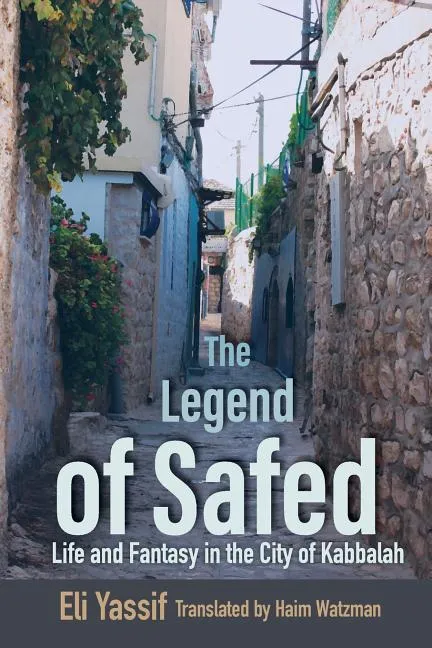
Jewish life through the legends created and narrated in Safed in the sixteenth century.
In 1908, Solomon Schechter--discoverer of the Cairo Geniza and one of the founders of the Jewish Theological Seminary of America--published his groundbreaking essay on the city of Safed (Tzfat) during the sixteenth century. In the essay, Schechter pointed out the exceptional cultural achievements (religious law, moral teaching, hermeneutics, poetry, geography) of this small city in the upper Galilee but did not yet see the importance of including the foundation on which all of these fields began--the legends that were developed, told, and spread in Safed during this period. In The Legend of Safed: Life and Fantasy in the City of Kabbalah, author Eli Yassif utilizes "new historicism" methodology in order to use the non-canonical materials--legends and myths, visions, dreams, rumors, everyday dialogues--to present these legends in their historical and cultural context and use them to better understand the culture of Safed. This approach considers the literary text not as a reflection of reality, but a part of reality itself--taking sides in the debates and decisions of humans and serving as a major tool for understanding society and human mentality.
Divided into seven chapters, The Legend of Safed begins with an explanation of how the myth of Safed was founded on the general belief that during this "golden age" (1570-1620), Safed was an idyllic location in which complete peace and understanding existed between the diverse groups of people who migrated to the city. Yassif goes on to analyze thematic characteristics of the legends, including spatial elements, the function of dreams, mysticism, sexual sins, and omniscience. The book concludes with a discussion of the tension between fantasy (Safed is a sacred city built on morality, religious thought, and well-being for all) and reality (every person is full of weaknesses and flaws) and how that is the basis for understanding the vitality of Safed myth and its immense impact on the future of Jewish life and culture.
The Legend of Safed is intended for students, scholars, and general readers of medieval and early modern Jewish studies, Hebrew literature, and folklore.
Haim Watzman
Translated by
Haim Watzman is a Jerusalem-based writer, journalist, and translator. His published works include Company C: an American's Life as a Citizen-soldier in Israel and A Crack in the Earth: A Journey up Israel's Rift Valley. Born in Ohio, he grew up in Maryland and relocated to Israel in 1978, where he now lives with his family.


Why Readwise Books?
Readwise Books is an ebook & audiobook platform that automatically logs how much you and your friends read, making it fun and easy to read more. Learn more →