Report an issue
Tell us what's wrong and we'll take a look.
Thanks – we got it. We'll review and follow up if needed.
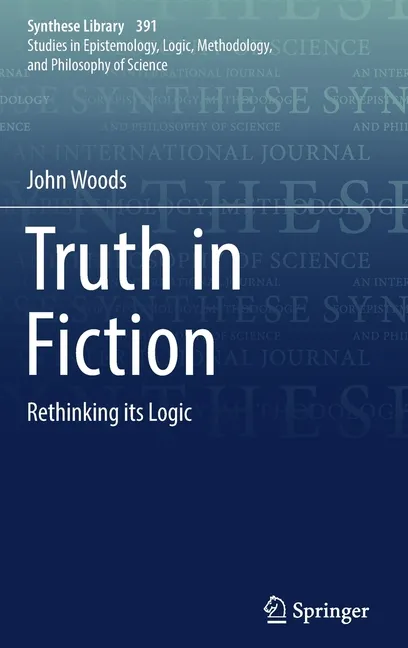
This monograph examines truth in fiction by applying the techniques of a naturalized logic of human cognitive practices. The author structures his project around two focal questions. What would it take to write a book about truth in literary discourse with reasonable promise of getting it right? What would it take to write a book about truth in fiction as true to the facts of lived literary experience as objectivity allows?
It is argued that the most semantically distinctive feature of the sentences of fiction is that they areunambiguously true and false together. It is true that Sherlock Holmes lived at 221B Baker Street and also concurrently false that he did. A second distinctive feature of fiction is that the reader at large knows of this inconsistency and isn't in the least cognitively molested by it. Why, it is asked, would this be so? What would explain it?
Two answers are developed. According to the no-contradiction thesis, the semantically tangled sentences of fiction are indeed logically inconsistent but not logically contradictory. According to the no-bother thesis, if the inconsistencies of fiction were contradictory, a properly contrived logic for the rational management of inconsistency would explain why readers at large are not thrown off cognitive stride by their embrace of those contradictions. As developed here, the account of fiction suggests the presence of an underlying three - or four-valued dialethic logic. The author shows this to be a mistaken impression. There are only two truth-values in his logic of fiction.
John Woods
John Woods grew up in Appalachian Ohio. He is a graduate of Ohio University's creative writing program and has published short stories in Meridian, Midwestern Gothic, Fiddleblack, and The Rag. He lives in Yorktown, Virginia.
More by John Woods





Why Readwise Books?
Readwise Books is an ebook & audiobook platform that automatically logs how much you and your friends read, making it fun and easy to read more. Learn more →