Report an issue
Tell us what's wrong and we'll take a look.
Thanks – we got it. We'll review and follow up if needed.
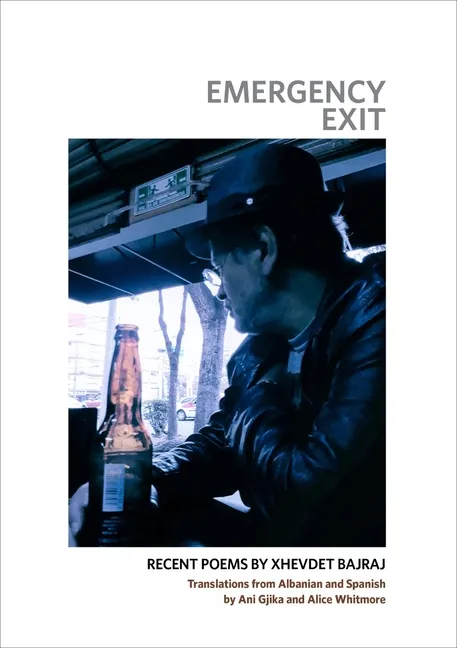
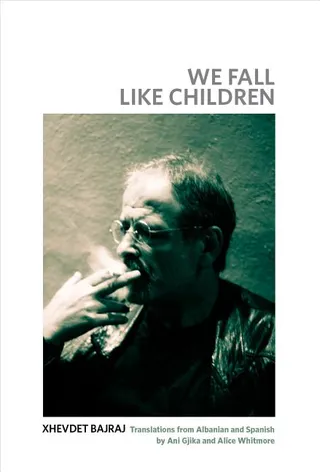
How does a writer translate war? And when the war is over, how does the individual reconstruct his world from the ruins? Bajraj lives in Mexico, in exile since the war in Kosovo, and a lot of his poetry is equally attentive to both the desire and the loneliness inherent in that fate. --Ani Gjika (translator) Bajraj's poems capture the troubled voice of the foreigner in a strange land; a place tethered, painfully and inextricably, to the past. Bajraj's Mexico City, populated by fallen angels and the ghosts of the poet's war-torn past, is an uneasy place, one in which even the most mundane of activities is tinged with darkness. Visions of violence intermittently break the flow of words, rendered all the more forceful by their sparse simplicity. This selection of short poems, like small windows into a world in which neither the reader nor the poet is entirely at ease, allow us to contemplate the brutal melancholy of war, exile, and their lingering effects. --Alice Whitmore
Xhevdet Bajraj
Xhevdet Bajraj (1960-2022) was a poet, dramatist, translator, and professor. His works of poetry, 29 volumes wrought in both Albanian and Spanish, have been translated into English, German, Danish, Serbian, Slovenian, Hungarian, Turkish, and Polish. He was the recipient of many awards, among them, the prize for poetry, conferred by the Kosovo Writers' Society in 1993, 1996, and 2000; the Goliardos International Prize for Poetry in 2004; and the Ali Podrimja Award in 2019 and 2021. His monodrama, Slaying the Mosquito, received the 2010 Katarina Josipi award for best original drama written in Albanian, and the Ptemio prize, given by the National Theatre and the Ministry of Culture of Kosovo in 2011.
Bajraj and his family were deported from Kosovo in May of 1999. Through the International Parliament of Writers and their program for persecuted writers, he was granted asylum and a fellowship at the Casa Refugio Citlaltepetl in Mexico. In the years that followed, he became a full professor of creative writing and literature at the Autonomous University of Mexico City and was inducted into the Sistema Nacional de Creadores de Arte.
More by Xhevdet Bajraj
Ani Gjika
Translated by
Albanian-born writer Ani Gjika is the award-winning author and literary translator of eight books and chapbooks of poetry, among them, Bread on Running Waters (Fenway Press, 2013), a finalist for the 2011 Anthony Hecht Poetry Prize and 2011 May Sarton New Hampshire Book Prize. Her translation from the Albanian of Negative Space by Luljeta Lleshanaku was published in 2018 by Bloodaxe Books in the U.K. where it was Poetry Book Society's Recommended Translation and shortlisted for the International Griffin Poetry Prize. It was published in the same year by New Directions in the U.S. where it was a finalist for a PEN Award and Best Translated Book Award. Most recently, she is the recipient of the New Immigrant Writing Prize for her memoir, An Unruled Body (Restless Books, 2023), which was a 2023 Foreword INDIES winner and on the 2024 Massachusetts Book Awards longlist for Nonfiction.


Why Readwise Books?
Readwise Books is an ebook & audiobook platform that automatically logs how much you and your friends read, making it fun and easy to read more. Learn more →