Report an issue
Tell us what's wrong and we'll take a look.
Thanks – we got it. We'll review and follow up if needed.
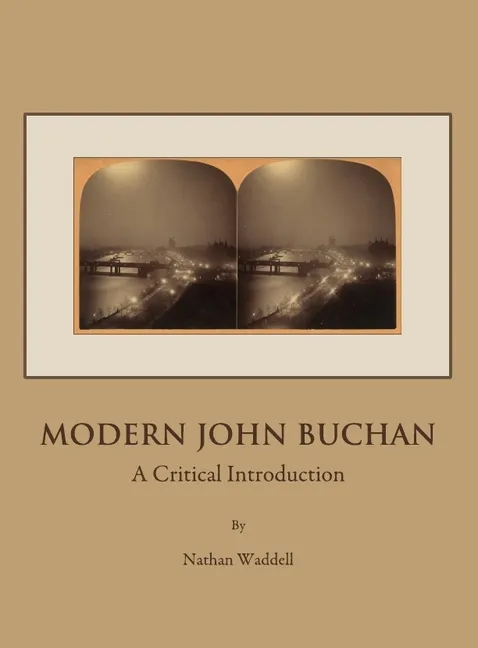
This book offers an introduction to the breadth and diversity of the literary and non-literary work of John Buchan (1875-1940). It stakes a claim for him as an engaged interpreter of twentieth-century modernity, and provides evaluative readings of his output. In addition to demonstrating how Buchan's work complicates the reductive view of early twentieth-century literature as neatly cordoned-off into low and high forms of production, this book discusses his theories of empire and imperialism, his account of historiography, and his response to the First World War. In addition to his many roles as a journalist, propagandist, war reporter, editor, civil servant, and statesman, Buchan was a committed literary critic, philosopher, and writer of history. This book explores the many connections between his work and such modernists as Joseph Conrad, Ford Madox Ford, D. H. Lawrence, and Wyndham Lewis, and it situates Buchan as an intellectual figure who provided a distinctive set of readings of his modern times. Running throughout is a consideration of Buchan's fascination with binaries, doubles, and duality, which his work variously upholds and investigates. It ends with a discussion of Buchan's most famous work-The Thirty-Nine Steps (1915)-in relation to paranoia and pathology.


Why Readwise Books?
Readwise Books is an ebook & audiobook platform that automatically logs how much you and your friends read, making it fun and easy to read more. Learn more →