Report an issue
Tell us what's wrong and we'll take a look.
Thanks – we got it. We'll review and follow up if needed.
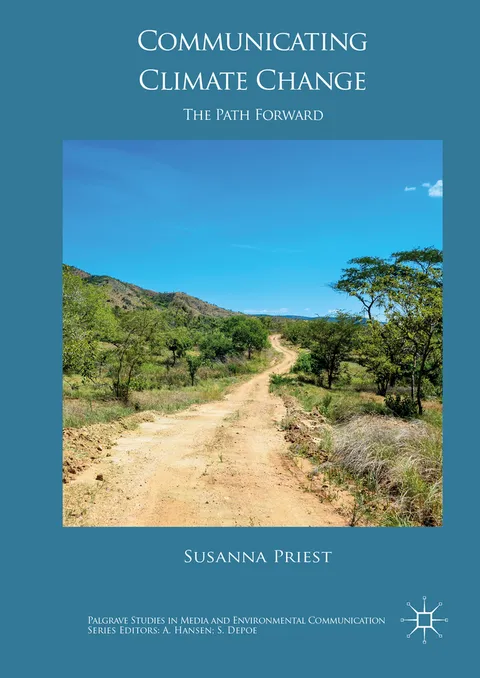
This book asks and answers the question of what communication research and other social sciences can offer that will help the global community to address climate change by identifying the conditions that can persuade audiences and encourage collective action on climate.
While scientists often expect that teaching people the scientific facts will change their minds about climate change, closer analysis suggests this is not always the case. Communication scholars are pursuing other ideas based on what we know about influence and persuasion, but this approach does not provide complete answers either. Some misconceptions can be corrected by education, and some messages will be more powerful than others. The advent of the Internet also makes vast stores of information readily available. But audiences still process this information through different filters, based on their own values and beliefs - including their understanding of how science works. In between momentous events, media coverage of climate tends to recede and individuals turn their attention back to their daily lives. Yet there is a path forward: Climate change is a social justice issue that no individual - and no nation - can solve on their own. A different sort of communication effort can help.
Susanna Horning Priest
Susanna Hornig Priest, Ph.D., has taught mass communication theory and research methods at the undergraduate and graduate level beginning in 1989. She holds a doctoral degree in communications from the University of Washington, a master's degree in sociology from the University of Nevada, Las Vegas, and a bachelor's degree in anthropology from the University of California at Berkeley. Her own research is centered on the role of science in American society and culture, its expression in the mass media, public engagement in science and science policy, and public opinion formation. She is also interested in the social roles of new media technologies.
Priest has served as a member of the Research and Publications committees of the Association for Education in Journalism and Mass Communications and as chair and research chair of the Association's Science Communication Interest Group. She is a Fellow of the American Association for the Advancement of Science, past associate editor of the journal Public Understanding of Science, and current editor of the journal Science Communication. She regularly serves as an advisor to a wide range of academic projects, government agencies, and private organizations on communication, public engagement, and public opinion issues, and reviews research submissions for a variety of academic organizations and scholarly journals. Her current research is supported by grants from the National Science Foundation and other sources.
Her publications include over 30 refereed research articles and nearly 20 book chapters, plus 2 books and the Encyclopedia of Science and Technology Communication, for which she served as General Editor. Currently, she is based in Camano Island, WA, and edits Science Communication.
More by Susanna Horning Priest


Why Readwise Books?
Readwise Books is an ebook & audiobook platform that automatically logs how much you and your friends read, making it fun and easy to read more. Learn more →