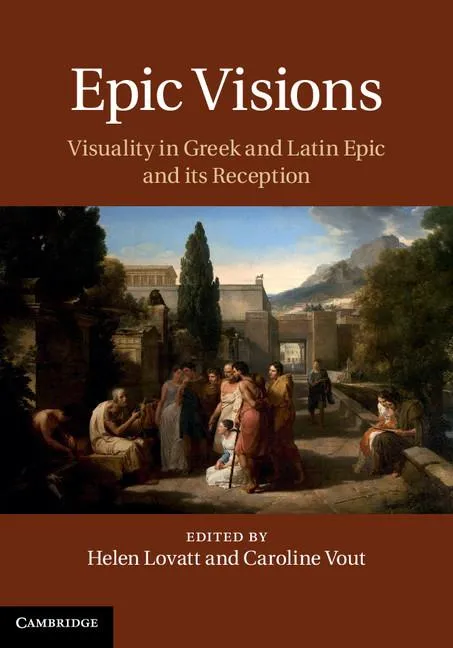
Epic Visions
Report an issue
Tell us what's wrong and we'll take a look.
Thanks – we got it. We'll review and follow up if needed.
This wide-ranging, interdisciplinary collection explores different ways of visualising Greek and Roman epic from Homer to Statius, in both ancient and modern culture. The book presents new perspectives on Homer, Virgil, Ovid, Lucan, Valerius Flaccus and Statius, and covers the re-working of epic matter in tragedy, opera, film, late antique speeches of praise, story-boarding, sculpture and wall-painting. The chapters use a variety of methods to address the relationship between narrative and visuality, exploring how and why epic has inspired artists, authors and directors, and offering fresh visual interpretations of epic texts. Themes and issues discussed include: intermediality, ekphrasis and panegyric, illusion and deception, imagery and deferral, alienation and involvement, the multiplicity of possible visual responses to texts, three-dimensionality, miniaturisation, epic as cultural capital, and the specificity of genres, both literary and visual.
Helen Lovatt
Helen Lovatt is Associate Professor of Classics at the University of Nottingham and her teaching includes epic and its reception. She is the author of Statius and Epic Games (Cambridge University Press, 2005) and co-editor, with Caroline Vout, of Epic Visions (Cambridge University Press, 2013).
Caroline Vout
Caroline Vout is Professor of Classics at the University of Cambridge and Director of its Museum of Classical Archaeology. A historian on ancient Greek and Roman art and literature, recent publications include Exposed: the Greek and Roman Body (Sunday Times Book of the Year) and Classical Art: a Life History from Antiquity to the Present.


Why Readwise Books?
Readwise Books is an ebook & audiobook platform that automatically logs how much you and your friends read, making it fun and easy to read more. Learn more →