The Letters of a Post-Impressionist
Being the Familiar Correspondence of Vincent Van Gogh
Report an issue
Tell us what's wrong and we'll take a look.
Thanks – we got it. We'll review and follow up if needed.
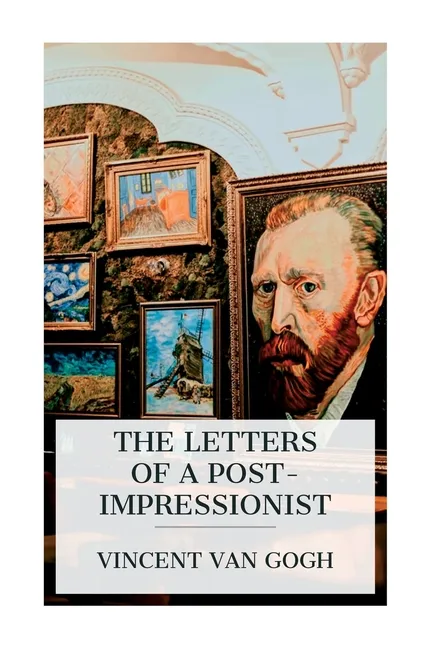
While the tragedy of his early death cemented his legacy as the romanticized ideal of a “tortured artist,” Vincent Van Gogh was more than his poverty, his mental illness and even his perceived genius.
Compiled by his sister-in-law, Johanna van Gogh-Bonger, The Letters of a Post-Impressionist: Being the Familiar Correspondence of Vincent Van Gogh, is collection of personal letters that exists because of the endearing friendship between two brothers: Theo and Vincent Van Gogh. Consisting of hundreds of letters—both complete and fragmented—between Vincent, his brother, and occasionally, his friend and fellow painter, Émile Bernard, this initial volume of published letters provide a reflection of Vincent Van Gogh as both a literary and visual artist.
Read as literature, these letters paint the portrait of an incredibly gifted writer with a unique sense of literary style—read as autobiography, they chronicle an artist’s life and his ability to use his brush as an expression of himself.
Detailing his views on his contemporaries, the Expressionist painting style, his art and inspirations—The Letters of a Post-Impressionist: Being the Familiar Correspondence of Vincent Van Gogh is a beautifully written epistolary biography that provides an intimate look into the mind of one of the most talented and celebrated artists in the world.
Since our inception in 2020, Mint Editions has kept sustainability and innovation at the forefront of our mission. Each and every Mint Edition title gets a fresh, professionally typeset manuscript and a dazzling new cover, all while maintaining the integrity of the original book.
With thousands of titles in our collection, we aim to spotlight diverse public domain works to help them find modern audiences. Mint Editions celebrates a breadth of literary works, curated from both canonical and overlooked classics from writers around the globe.
Vincent Van Gogh
Born on May 30, 1853 in the south of The Netherlands, Vincent van Gogh was the oldest child of a Dutch Reformed pastor and an amateur artist. Intense and moody from an early age, he received public, private and home schooling before dropping out at the age of 15 to assist with the family finances. With the help of an uncle, young Vincent got a job as an apprentice at the internationally renowned art firm of Goupil and Cie. After a clerkship in The Hague, he was promoted to sales representative, working successively in the London and Paris offices. Although initially happy, van Gogh's argumentative personality and strong opinions about all things artistic and religious eventually led to his dismissal. After a series of short-term jobs as a teacher and bookstore clerk, Vincent decided to follow in his father's and grandfather's footsteps and pursue the ministry. Although he took preparatory courses in Latin, Greek and Theology, he failed to gain entrance to the university. Undeterred, he sought opportunities to teach and preach as a part-time evangelist in the coal-mining district of Belgium. So fervent was his commitment to his work that he insisted on living under the same deplorable conditions as the miners-giving away much of his money, clothes and food. After six months, the local church hierarchy, who seemed as alarmed by his zeal as by his declining physical and mental health, urged him to consider another calling. During this period, van Gogh had begun sketching the local peasants, and with his brother, Theo's, assistance decided to pursue art full time. Eschewing formal art education, van Gogh was largely self-taught, but over the course of a 10 year career he amassed a body of work that includes 864 oil paintings, 1,039 drawings, 150 water colors, 10 lithographs and 133 letter sketches, many of which are considered to be among the world's great masterpieces, several selling in excess of $100 Million USD.
More by Vincent Van Gogh


Why Readwise Books?
Readwise Books is an ebook & audiobook platform that automatically logs how much you and your friends read, making it fun and easy to read more. Learn more →