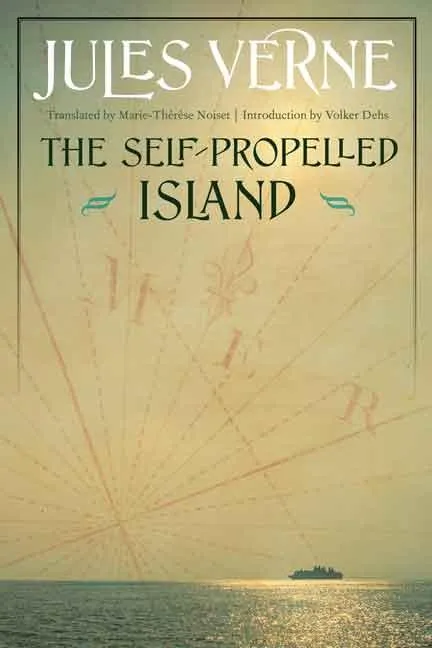
The Self-Propelled Island
Report an issue
Tell us what's wrong and we'll take a look.
Thanks – we got it. We'll review and follow up if needed.
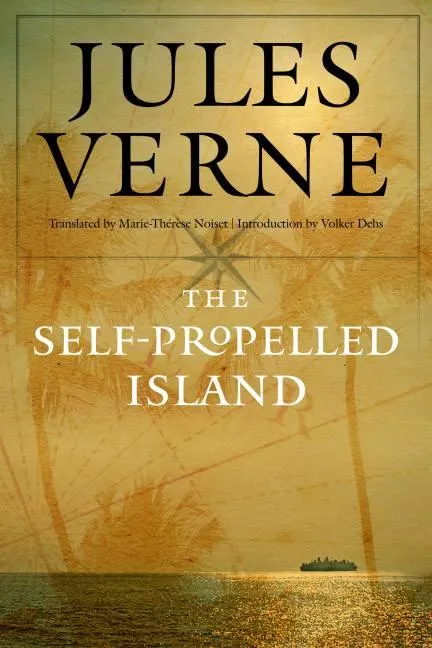
The Self-Propelled Island is the first unabridged English translation of Jules Verne's original story featuring a famous French string quartet that is abducted by an American businessman and taken to Standard Island to perform for its millionaire inhabitants. The quartet soon discovers that Standard Island is not an island at all, but an immense, futuristic ship possessing all the features of an idyllic haven. Equipped with the most opulent amenities, Standard Island travels the Pacific Ocean, traversing the south archipelagos and stopping at many "sister" islands for the pleasure of its well-heeled inhabitants. These inhabitants soon meet with the danger, in its various forms, that is inherent in ocean travel. Meanwhile, the French quartet is witness to the rivalry that exists between the two most powerful families onboard, a rivalry that keeps the future of the island balancing on the edge of a knife.
First published in English in 1896, the novel was originally censored in translation. Dozens of pages were cut from the story because English translators felt they were too critical of Americans as well as the British. Here, for the first time, readers have the pleasure of reading The Self-Propelled Island as Verne intended it.

Jules Verne
Jules Verne (1828-1905) is considered by many the father of science fiction. Born in Nantes, France, he studied law but turned to writing opera libretti until the 1863 publication of Five Weeks in a Balloon, the first of his Extraordinary Voyages series. Its success encouraged him to produce a number of classic and prophetic science fiction novels, including Journey to the Center of the Earth and Twenty Thousand Leagues under the Sea. His stories foresaw many scientific and technological developments, including the submarine, television, and space travel.
More by Jules Verne








Why Readwise Books?
Readwise Books is an ebook & audiobook platform that automatically logs how much you and your friends read, making it fun and easy to read more. Learn more →