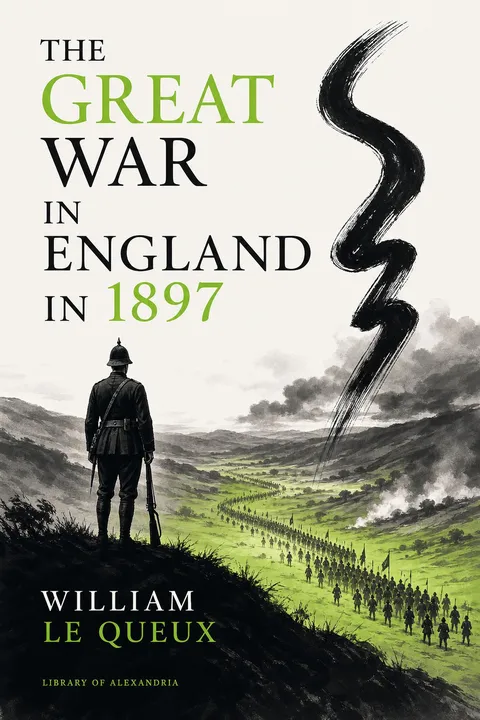
The Great War in England in 1897
Victorian Invasion Fiction of Naval Battles and a Nation Fighting for Survival
Report an issue
Tell us what's wrong and we'll take a look.
Thanks – we got it. We'll review and follow up if needed.

Hostile fleets are approaching, and Britain's confidence is about to meet the test of invasion.
In The Great War in England in 1897, William Le Queux imagines a coordinated attack by France and Russia that brings naval bombardment and invading armies to British shores. The news breaks during a performance at a London theatre on a hot August night. Beyond the theatre doors, a national emergency is unfolding: coastal assaults, desperate retreats, and battles that carry the conflict into the country's cities.
This Victorian invasion novel combines military spectacle with a pointed question: what happens when a powerful nation discovers that its defences are not ready? From cruisers fighting off Beachy Head to street resistance in Birmingham and the bombardment of London, Le Queux makes strategic weakness immediate and personal. Soldiers, naval officers, spies, and civilians share the danger, while letters embedded in the narrative lend the imagined conflict the texture of eyewitness reporting. Its anxieties about complacency, preparedness, and institutional failure remain recognisable long after the world that produced it.
What readers find inside:
- Invasion and resistance - French and Russian forces bring a fictional conflict to British soil.
- Naval engagements - Fighting in the Channel and the Mediterranean exposes the stakes of maritime defence.
- Cities under attack - Birmingham's resistance and London's bombardment bring the crisis into familiar urban settings.
- Lives under pressure - Troops and ordinary citizens confront the human consequences of national unpreparedness.
- Victorian strategic fears - The story turns contemporary concerns about military readiness into an urgent narrative of invasion, struggle, and victory.
A compelling choice for readers of classic military fiction, naval adventure, and speculative stories that reveal the fears of an earlier age.
Step into a Britain facing the invasion it hoped would never come.
William Le Queux
William Le Queux was a British author and journalist known for his influential contributions to spy fiction and political thrillers in the early 20th century. His works often focused on themes of national security and international intrigue, especially during the tensions of World War I. In addition to his fiction, Le Queux was an active journalist, reporting on various political and social issues of his time. He engaged with topics such as espionage and defense, reflecting the geopolitical anxieties of his era. Notable works include ""The Invasion of 1910,"" which imagines a German invasion of Britain, and ""The Under-Secretary,"" exploring the intricacies of political maneuvering and covert operations. Le Queux's storytelling is characterized by vivid detail and a deep understanding of human psychology, securing his legacy as a pioneer in modern spy literature and a significant voice in early 20th-century British fiction.
More by William Le Queux










Why Readwise Books?
Readwise Books is an ebook & audiobook platform that automatically logs how much you and your friends read, making it fun and easy to read more. Learn more →