Report an issue
Tell us what's wrong and we'll take a look.
Thanks – we got it. We'll review and follow up if needed.
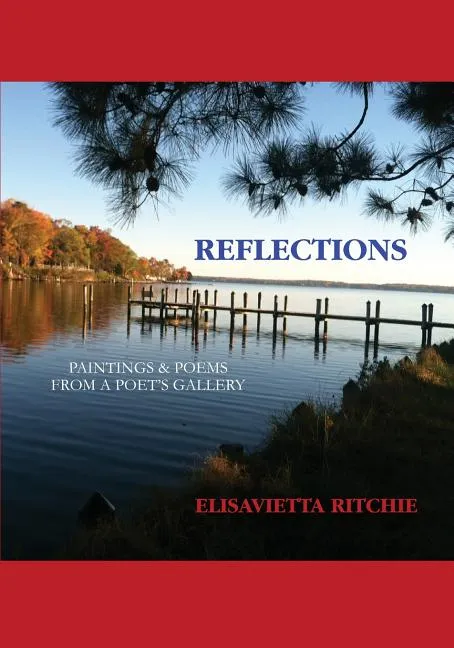
This will be the third collection of Elisavietta Ritchie's work we have been privileged to publish, and what a remarkable collection it is, rich imagination and a talent for metaphors the hallmarks of her work. Here we see a poet at the top of her game, and game is the precise word for the often whimsical accounts she gives of the painting on which she reflects. William Meredith's short poem seems an apt introduction to the book.
One thinks of Keats' critical touchstone, the concept of negative capability he proposes, the sensitivity and imaginative power an artist has to intuit even the very center of a cue ball, the ability of the individual to perceive, think, and operate outside the box. Poets often employ this symbiotic relationship with the visual arts, a literary device known as ekphraksis used to convey the deeper symbolism of the corporeal art form by means of a separate medium such as poetry. The poet contemplates a work of art and responds with a lifetime of experience and curiosity to imagine the world found in a given painting.
Here the poems are written in the voices of the artist, his wife (who might also be an artist), his mistress, his model, his dog--One thinks of the popular film in which all the characters in the paintings in a museum step from their frames and celebrate their liberation once the museum doors have closed for the night.
This seems a happy collaboration of artist and poet enhancing our understanding of a painting, as well as taking joy in the work from a verbal prospective. "How do I know what I think until I see what I say," I believe W.H. Auden once quipped.
In Chinese ideograms, a symbol for house combined with the figure of a stick woman within the house may be a symbol of peace. A plus B equals C, as it were, when a poet creates a new work standing on the shoulders of another artist creating something new under the sun.
An earlier title for this collection, GLAD I GAVE TO ART MY ALL highlights what a long and distinguished career Lisa Ritchie has had. Perhaps only Grace Cavalieri is more prolific. When do these women sleep! I think of a William Meredith poem from HAZARD THE PAINTER which tells the story of a 8-year-old Erica, a "factory of will," who when she returns from dancing class, "she dances!" Long may the dance continue for Lisa Ritchie and all her devoted followers who love how poetry can buoy the human spirit in the hands of such a fierce intelligence and curiosity.
Elisavietta Ritchie
Elisavietta Ritchie is a multi-tasking writer, poet, editor, photographer, mentor, workshop leader and poet-in-the-schools and universities in the United States and, sponsored by the United States Information Service, Brazil, Australia, Canada and the Far East. She won the Great Lakes Colleges Award for her first book, Tightening the Circle over Eel Country; four National Endowment for the Arts, Pushcart and other awards; and many acceptances for individual poems and stories. She was asked for poems to be set to compositions by composers David Owens, Jackson Berkey and others. She continues to write, mentor, host informal writers' workshops. Elisavietta Ritchie is married to writer and former New York Times journalist Clyde Henri Farnsworth, and frequently took photographs to accompany his articles in Canada, Australia, Europe and the United States. They live at the tip of Southern Maryland overlooking the Patuxent River. Both are insomniacs.
More by Elisavietta Ritchie


Why Readwise Books?
Readwise Books is an ebook & audiobook platform that automatically logs how much you and your friends read, making it fun and easy to read more. Learn more →