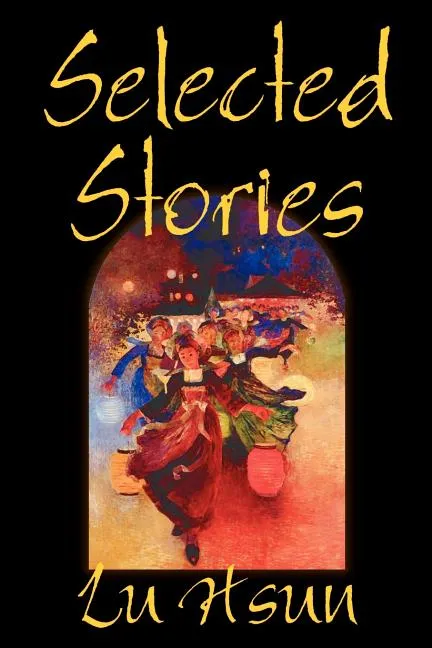
Selected Stories of Lu Hsun, Fiction, Short Stories
Report an issue
Tell us what's wrong and we'll take a look.
Thanks – we got it. We'll review and follow up if needed.
When I was young I, too, had many dreams. Most of them came to be forgotten, but I see nothing in this to regret. For although recalling the past may make you happy, it may sometimes also make you lonely, and there is no point in clinging in spirit to lonely bygone days. However, my trouble is that I cannot forget completely, and these stories have resulted from what I have been unable to erase from my memory.
After the 1919 May Fourth Movement, Lu Xun's writing began to exert a substantial influence on Chinese literature and popular culture. He was primarily a leftist and liberal and was highly acclaimed by the Chinese government after 1949, when the People's Republic of China was founded. Mao Zedong himself was a lifelong admirer of Lu Xun's writing.
Lu Hsun
Lu Hsun (also known as Lu Xun), was the pen name of Zhou Shuren (1881-1936), a short story writer, editor, translator, literary critic, essayist, poet, and educator. Xun is widely regarded as the most important writer of modern Chinese literature and is best known for his savage satire on the plight of his native China in the early twentieth century. His three short story collections, Call to Arms, Wandering, and Old Tales Retold, are acclaimed classics. In addition, his academic study, A Brief History of Chinese Fiction, and companion compilations of classical fiction remain standard works. His translations, especially those of Russian works, are also considered significant.
More by Lu Hsun


Why Readwise Books?
Readwise Books is an ebook & audiobook platform that automatically logs how much you and your friends read, making it fun and easy to read more. Learn more →