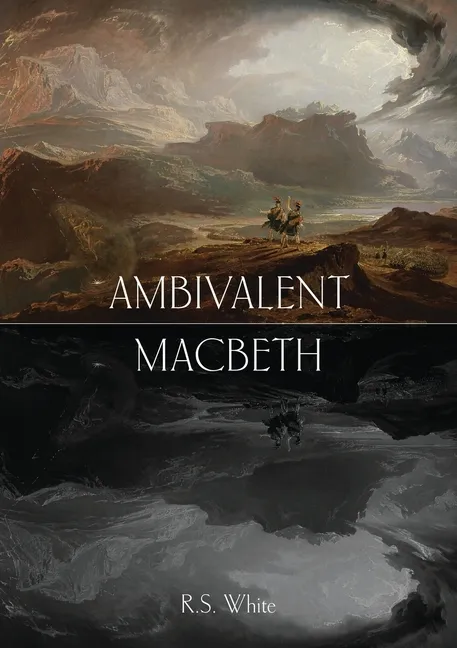
Ambivalent Macbeth
Report an issue
Tell us what's wrong and we'll take a look.
Thanks – we got it. We'll review and follow up if needed.
Macbeth is often read in a singular fashion: either as a cautionary morality tale warning against ambition, or as a psychological study of evil. In Ambivalent Macbeth, renowned Shakespeare scholar R. S. White argues that these differing readings result from a profoundly ambivalent play, and that this quality is a clue to its greatness.
White explores how radical ambivalence permeates the atmosphere, imagery, themes and characterisation of 'the Scottish play'. He considers Shakespeare's historical context and source material, and examines key cinematic, theatrical and other adaptations of the play. Throughout, he argues that an open-minded acceptance of ambivalence can inspire a multitude of readings, and that this complexity helps to explain the play's intriguing longevity.
Robert White
Robert White is a professor of geophysics at Cambridge University, England; associate director of the Faraday Institute for Science and Religion; and a fellow of The Royal Society, the UK's national academy of science. He is coauthor with Denis Alexander of Beyond Belief: Science, Faith and Ethical Challenges.
More by Robert White




Why Readwise Books?
Readwise Books is an ebook & audiobook platform that automatically logs how much you and your friends read, making it fun and easy to read more. Learn more →