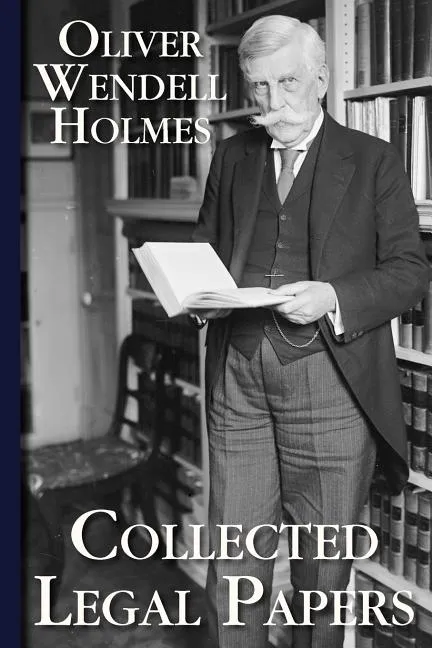
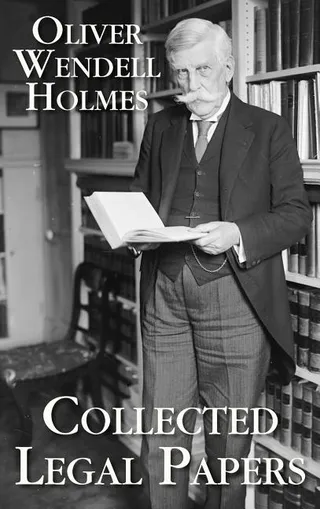
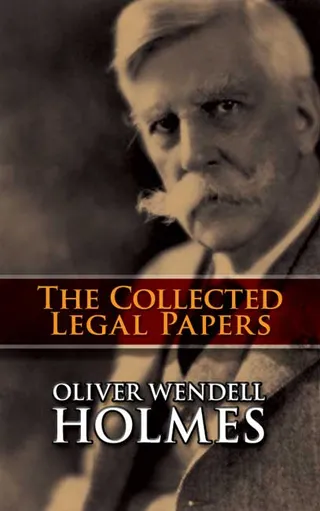
Collected Legal Papers
Report an issue
Tell us what's wrong and we'll take a look.
Thanks – we got it. We'll review and follow up if needed.
A valuable compilation, this volume contains Holmes' most famous speeches and papers from 1885 to 1918. Its publication in 1920 was an important event in the legal community, and it was reviewed with great enthusiasm in the major journals and law reviews. Roscoe Pound offered the finest assessment in "Judge Holmes's Contributions to the Science of Law," an essay-review from 1921 that analyzed the place of these writings in the development of American law from the 1880s to the 1920: "Rereading them consecutively in their new form and remembering the dates of their original publication, one can but see that their author has done more than lead American juristic thought of the present generation. Above all others he has shaped the methods and ideas that are characteristic of the present as distinguished from the immediate past." Harvard Law Review 34 (1920-1921):449. ". . . Collected Legal Essays is a good vertical section of the mind of that judge who beyond any other of his generation has impressed his ideas on the structure and course of the law."- Learned Hand. Oliver Wendell Holmes, Jr. [1841-1935] served as Chief Justice of the Supreme Court of the United States from 1902 to 1932. Known as "The Great Dissenter" on the Court because of the brilliant legal reasoning found in his written opinions, he often differed in opinion from Theodore Roosevelt, who had appointed him to the bench. As a young man he attended Harvard College, served in the American Civil War among the "Harvard Regiment" and was seriously wounded. After the war he attended, and later taught at Harvard Law School before his appointment to the Supreme Judicial Court of Massachusetts. Well known for his legal philosophy espoused here and in The Common Law, Holmes proposed that the law was not a science founded on abstract universal principles but a body of practices that responded to particular situations. CONTENTS Early English Equity, 1885 The Law. Speech, 1885 The Profession of the Law. Part of an Address, 1886 On Receiving the Degree of LL.D. Speech, 1886 The Use of Law Schools. Oration, 1886 Agency, 1891 Privilege, Malice and Intent, 1894 Learning and Science. Speech, 1895 Executors, 1895 The Bar as a Profession, 1896 Speech at Brown University, 1897 The Path of the Law, 1897 Legal Interpretation, 1899 Law in Science and Science in Law. Address, 1889 Speech at Bar Association Dinner, 1900 Montesquieu, 1900 John Marshall. From the Bench, February 4, 1901 Address at Northwestern University Law School, 1902 Economic Elements, 1904 Maitland, 1907 Holdsworth's English Law, 1909 Law and the Court. Speech, 1913 Introduction to Continental Legal Historical Series, 1913 Ideals and Doubts, 1915 Bracton, 1915 Natural Law, 1918
Oliver Wendell Holmes
Oliver Wendell Holmes Sr. (1809-1894) was an American physician, writer, and professor of anatomy and physiology at Harvard University. He was a prominent figure in American literature during the 19th century and is known for his contributions to both medicine and literature. Holmes wrote several novels, including "Elsie Venner," which was published in 1861. The book is considered a significant work of American literature and deals with themes such as original sin, the nature of good and evil, and the role of heredity in human behavior. The novel is set in a fictional New England town and tells the story of a young woman named Elsie Venner, who is believed to be the offspring of a union between a human and a rattlesnake. In addition to his literary works, Holmes is also known for his medical writing, particularly his essays on medical topics, which were published in several journals and collections.
More by Oliver Wendell Holmes



Why Readwise Books?
Readwise Books is an ebook & audiobook platform that automatically logs how much you and your friends read, making it fun and easy to read more. Learn more →