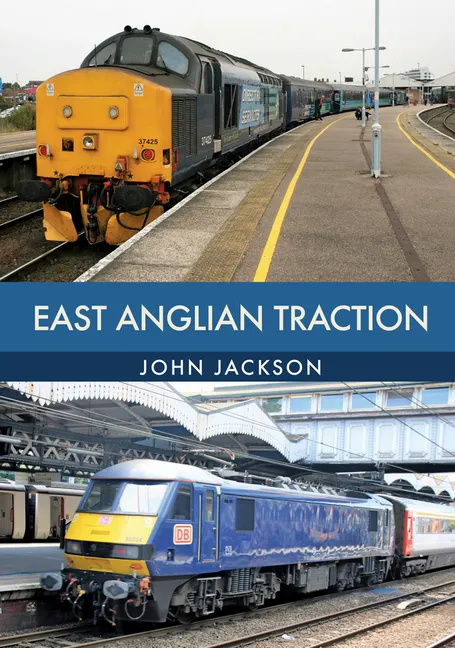
East Anglian Traction
Report an issue
Tell us what's wrong and we'll take a look.
Thanks – we got it. We'll review and follow up if needed.
Take a look at East Anglia's rail map and it's obvious that one line dominates. The Great Eastern Main Line (GEML) from Norwich to London's Liverpool Street runs broadly north to south through the region with Ipswich an important junction on its route through Suffolk and on to Essex and the capital. Passenger services on this 'core' London route remain in the control of Class 90 locomotives. So, East Anglia is one of the last bastions for UK loco-hauled passenger trains. Additionally, some London-bound stopping services starting at Ipswich are handled by electric multiple units (EMUs).Several lines survive around the coast serving towns such as Great Yarmouth, Lowestoft and Sheringham. Both Ipswich and Norwich are also served by lines that run inland to destinations such as Cambridge and Peterborough. These secondary lines are chiefly worked by diesel multiple units. An ongoing shortage has resulted in some services to Great Yarmouth and Lowestoft seeing regular usage of 'short sets' of coaching stock, hauled by the popular Class 37s and 68s. In the west of the region, EMUs are seen on the services operating between Ely and King's Lynn. The area's freight is centred on the UK's busiest container port, Felixstowe. This non-electrified branch often means a change of traction at Ipswich and is the main reason Freightliner has a major loco stabling point there. This important traffic is augmented by a handful of other freight services in the region.East Anglia is a region of rail contrasts and that fascinating mix of freight and passenger workings is shown in this profusely illustrated book.







Why Readwise Books?
Readwise Books is an ebook & audiobook platform that automatically logs how much you and your friends read, making it fun and easy to read more. Learn more →