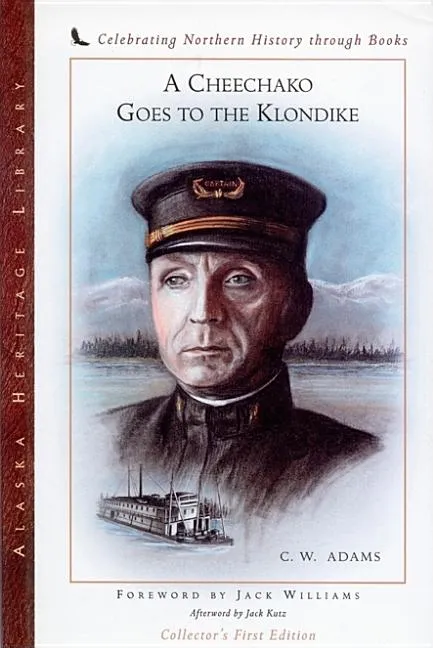
Cheechako Goes to the Klondike
Report an issue
Tell us what's wrong and we'll take a look.
Thanks – we got it. We'll review and follow up if needed.
The Klondike Stampede caused a transportation boom in the north, where in its thrilling heyday about 250 wooden steamboats operated in the Yukon River drainage of Alaska and the Yukon. The sternwheelers became gold rush icons. But the hardy, pragmatic entrepreneurs who ran the boats were lured by profits, not romance. In 1901, a passenger's fare from St. Michael to Dawson (about 1,800 miles) was $125, and cargo was moved upriver at $100 a ton. Yet it was a tough, risky business. The season was short, good crews were hard to find, and a navigation error could sink or strand an investment worth tens of thousands of dollars -- huge sums at the turn of the century. Mechanical problems were occupational hazards. The steamboats consumed enormous amounts of firewood for their boilers. And if a riverboat didn't find a safe berth or drydock before freezeup, it risked being crushed by ice the following spring. Charles W. Adams was an able, smart business college graduate who bought a share of the Lavelle Young in his mid-20s. He became one of the North's great riverboat captains, lived enough adventure in the north to fill several lifetimes, and played a crucial role in the founding of Fairbanks, Alaska. This first book in the Alaska Heritage Library series preserves the captain's richly detailed and historically important journal.




Why Readwise Books?
Readwise Books is an ebook & audiobook platform that automatically logs how much you and your friends read, making it fun and easy to read more. Learn more →