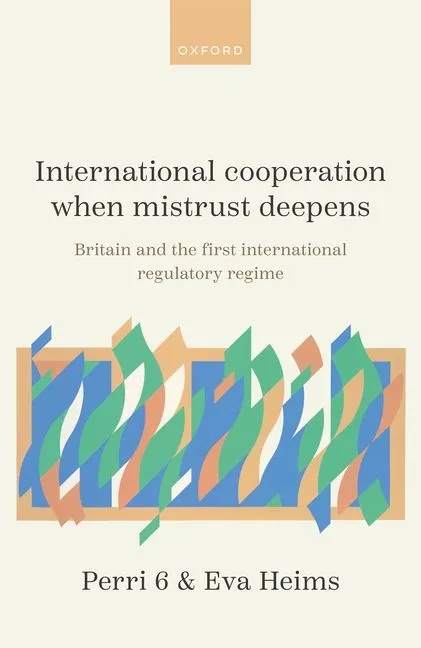
International Cooperation When Mistrust Deepens
Britain and the First International Regulatory Regime
Report an issue
Tell us what's wrong and we'll take a look.
Thanks – we got it. We'll review and follow up if needed.
The book challenges many of the conventional explanations for this puzzling situation and draws on neo-Durkheimian institutional theory to develop a novel explanation. It examines the case of Britain's relationship with the first global regulatory regime, which was concerned with international telegraphy, submarine telegraph cables, and radiotelegraphy from the 1860s through to 1914. The regime was created in a time of European wars and growing imperial conflicts. Although Britain seriously contemplated leaving the International Telegraph Union in 1901-2, the state went on to deepen cooperation with other countries in telegraphy, including with Germany even as preparations for war advanced.
Drawing on extensive archival sources, Perri 6 and Eva Heims show that social organisation in government can cultivate institutional buffering between aspects of external policy which can sustain commitment despite deepening conflict. In doing so, they show how a neo-Durkheimian approach provides a powerful explanation for deepening cooperation even as mistrust rises, which has significant implications for understanding state formation.


Why Readwise Books?
Readwise Books is an ebook & audiobook platform that automatically logs how much you and your friends read, making it fun and easy to read more. Learn more →