Report an issue
Tell us what's wrong and we'll take a look.
Thanks – we got it. We'll review and follow up if needed.
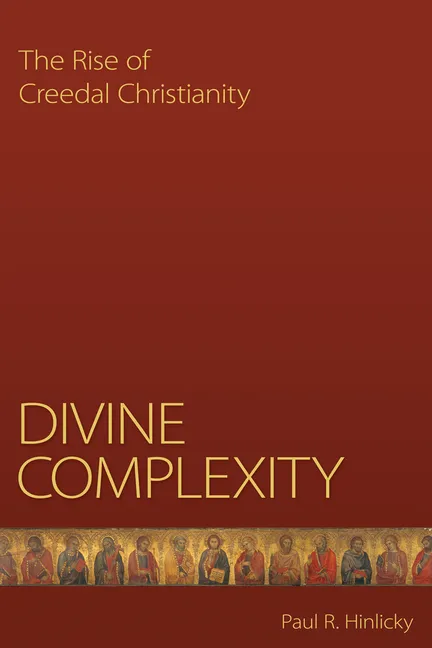
Paul Hinlicky reads the history of the early church as a genuine, centurieslong theological struggle to make sense of the confession of Jesus' life, death, and resurrection. Protesting a recent parting of the ways between systematic theology and the history of early Christianity, Hinlicky relies on the insights of historical criticism to argue in this historical survey for the coherence of doctrinal development in the early church. Hinlicky contends that the Christian tradition shows evidence of being governed by a hermeneutic of "cross and resurrection." In successive chapters he finds in the New Testament writings a collective Christological decision against docetism; in the union of Old and New Testaments, a monotheistic decision against Gnostic dualism; in the resulting sweep of the canon a narrative of the divine economy of salvation that posed a trinitarian alternative to Arian Unitarianism; and in the insistence upon the cross of the incarnate Son, a rebuke of Nestorianism.
This book is written with the student of early Christianity and the development of doctrine in mind.
Paul R. Hinlicky
Paul R. Hinlicky (PhD, Union Theological Seminary, New York; DHabil, Comenius University, Bratislava) served as Tise Professor of Lutheran Theology at Roanoke College for many years and is currently distinguished fellow and research professor at the Institute of Lutheran Theology. He is the author of numerous books, including Divine Simplicity: Christ the Crisis of Metaphysics and three critically acclaimed studies in systematic theology: Beloved Community: Critical Dogmatics after Christendom, Luther and the Beloved Community: A Path for Christian Theology after Christendom, and Divine Complexity: The Rise of Creedal Christianity. He is also coeditor of the Oxford Encyclopedia of Martin Luther.
More by Paul R. Hinlicky



Why Readwise Books?
Readwise Books is an ebook & audiobook platform that automatically logs how much you and your friends read, making it fun and easy to read more. Learn more →