Report an issue
Tell us what's wrong and we'll take a look.
Thanks – we got it. We'll review and follow up if needed.
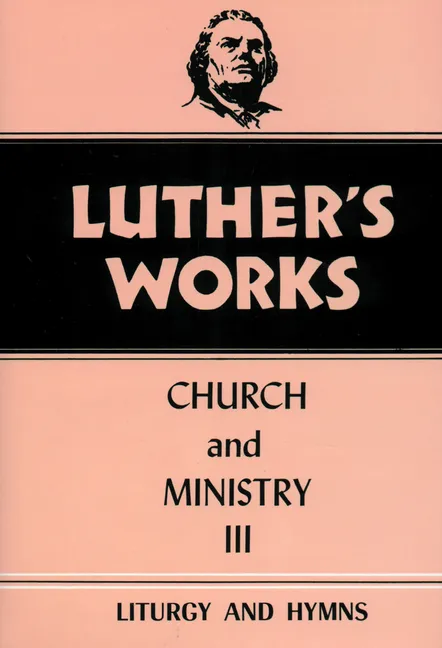
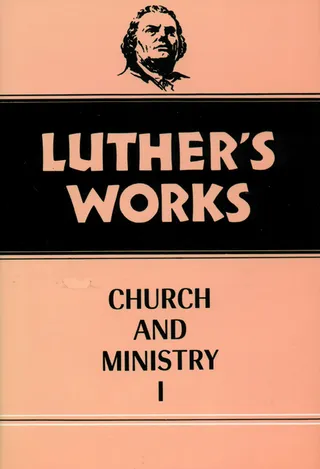
Conflict between the church of Rome and the reformers reached its most violent peak in the five years before the Council of Trent in 1545, a council the pope had been delaying for years. Luther had not only given up hope for a "free, Christian council," but had also come to the conclusion that the authority of such a council was limited to reaffirming the ancient faith of the apostles. This radical departure from Rome's interpretation of its own authority forms the basis of Luther's new doctrine of the church -- and also of his advice to Protestant princes on the problems of ecclesiastical property. It is this doctrine of the church which is the theme of the three treatises written during this period and included in this volume.
Eric W Gritsch
Eric W. Gritsch was a native of Austria, did his graduate work in Vienna, in Zurich, in Basel, and at Yale, and was Emeritus Professor of Church History at Gettysburg Lutheran Seminary. He was also an ordained pastor in the Evangelical Lutheran Church in America and an author of numerous books, including Martin--God's Court Jester (1983), The Wit of Martin Luther (2006), Toxic Spirituality (2009), Martin Luther's Anti-Semitism (2012), and Christendumb (2013).
More by Eric W Gritsch
Martin Luther
Martin Luther (1483-1546) was a German theologian, priest, professor and religious reformer who played a major role in the Protestant Reformation. He challenged several practices of the Roman Catholic Church, particularly the sale of indulgences, through his famous Ninety-Five Theses, published in 1517. His teachings emphasized salvation through faith, the authority of Scripture and the importance of God's grace. His notable works include The Ninety-Five Theses, The Bondage of the Will, The Freedom of a Christian, The Small Catechism and The Large Catechism.
More by Martin Luther



Why Readwise Books?
Readwise Books is an ebook & audiobook platform that automatically logs how much you and your friends read, making it fun and easy to read more. Learn more →