Report an issue
Tell us what's wrong and we'll take a look.
Thanks – we got it. We'll review and follow up if needed.
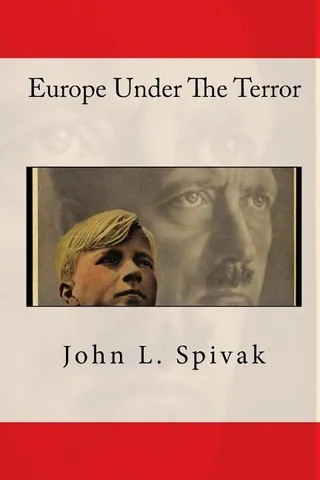
How does a democracy defend itself when foreign power works through newspapers, businesses, universities, civic organisations and public officials rather than open invasion? This investigative account traces the international "Fifth Column" clandestine Nazi, Italian Fascist and Japanese networks using espionage, propaganda and political infiltration to prepare the ground for fascist expansion. Its subject is a hidden campaign conducted through institutions whose openness could be turned against them. Across the United States and beyond, the investigation follows connections between foreign agents and local collaborators, examining how influence could pass through respectable channels while arms smuggling and paramilitary preparation advanced elsewhere. Reported scenes and interviews bring the inquiry close to those involved, while political analysis reveals the broader organisation behind apparently separate activities. Rather than reducing covert influence to isolated spies, the narrative exposes a coordinated system designed to exploit hesitation, division and institutional failure. Documentary records and reproduced correspondence give the reportage an evidential force, allowing clandestine methods to emerge through the networks' own communications as well as the reporter's scrutiny. The focus remains on the machinery of subversion: how propaganda enters public life, how agents cultivate access, and how democratic institutions can fail to recognise organised threats until they are deeply embedded. Both an espionage investigation and a study of political vulnerability, the work confronts the uneasy boundary between legitimate participation and covert manipulation. This book was out of print for decades and is now republished by Alpha Editions. It has been restored for today's and future generations. This edition is not just a reprint - it's a collector's item and a cultural treasure.
John L Spivak
John Louis Spivak was a foreign correspondent and author in the decades before World War II. He wrote about the problems of the working class, racism, and the spread of fascism in Europe and the United States. Most of his writings date from the 1920s and 1930s
More by John L Spivak


Why Readwise Books?
Readwise Books is an ebook & audiobook platform that automatically logs how much you and your friends read, making it fun and easy to read more. Learn more →