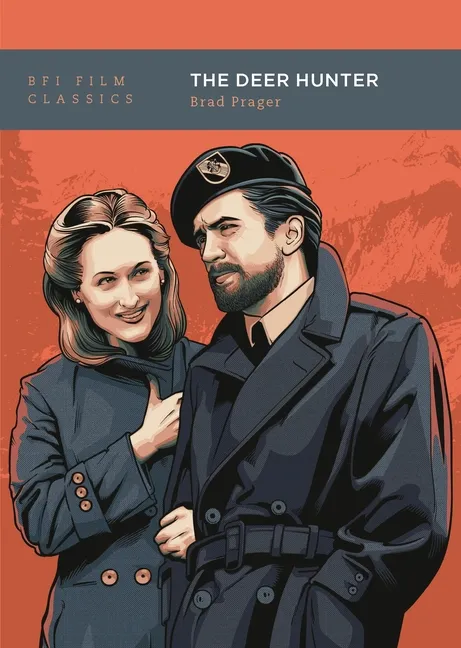
The Deer Hunter
Report an issue
Tell us what's wrong and we'll take a look.
Thanks – we got it. We'll review and follow up if needed.
Michael Cimino's The Deer Hunter was met with both critical and commercial success upon its release in 1978. However, it was also highly controversial and came to be seen as a powerful statement on the human cost of America's longest war and as a colonialist glorification of anti-Asian violence.
Brad Prager's study of the film considers its significance as a war movie and contextualizes its critical reception. Drawing on an archive of contemporaneous materials, as well as an in-depth analysis of the film's lighting, mise-en-scène, multiple cameras and shifting depths of field, Prager examines how the film simultaneously presents itself as a work of cinematic realism, while problematically blurring the lines between fact and fiction. While Cimino felt he had no responsibility to historical truth, depicting a highly stylized version of his own fantasies about the Vietnam War, Prager argues that The Deer Hunter's formal elements were used to bolster his troubling depictions of war and race.
Finally, comparing the film with later depictions of US-led intervention such as Albert and Allen Hughes's Dead Presidents (1995) and Spike Lee's Da Five Bloods (2020), Prager illuminates The Deer Hunter's major presumptions, blind spots and omissions, while also presenting a case for its classic status.
Brad Prager
Brad Prager is professor of film studies and German studies at the University of Missouri. He is the author of After the Fact: The Holocaust in Twenty-First Century Documentary Film and The Cinema of Werner Herzog: Aesthetic Ecstasy and Truth.
More by Brad Prager


Why Readwise Books?
Readwise Books is an ebook & audiobook platform that automatically logs how much you and your friends read, making it fun and easy to read more. Learn more →