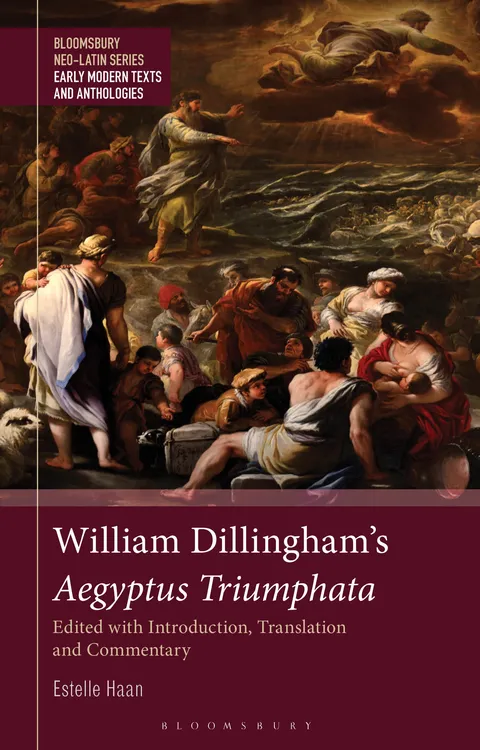
William Dillingham's Aegyptus Triumphata
Edited with Introduction, Translation and Commentary
Report an issue
Tell us what's wrong and we'll take a look.
Thanks – we got it. We'll review and follow up if needed.
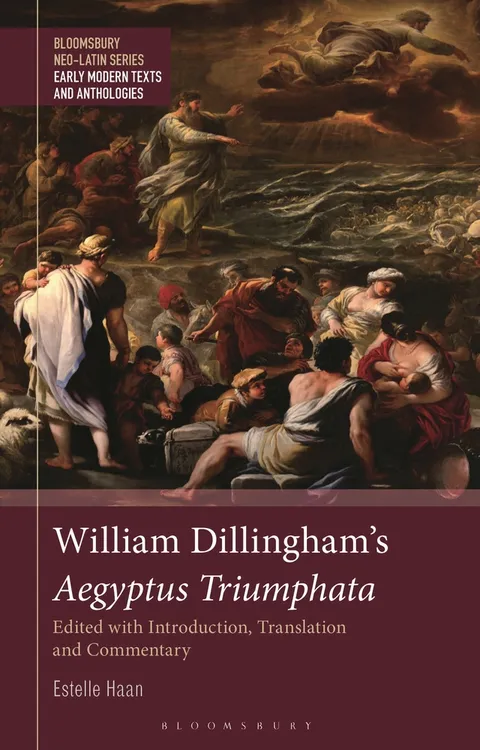
William Dillingham's Aegyptus Triumphata (1680) takes as its subject the plagues of Egypt, the crossing of the Red Sea, and Moses' consequential hymn of thanksgiving to God (Exodus 7–15). This, the first edition of the poem, introduces it to the scholarly community. Balancing accessibility with critical and theoretical rigour, it presents the Latin text and a facing English translation, complemented by an Introduction and Commentary that situate the work in relation to: biblical verse-paraphrase; the biblical epic tradition from the late antique to the early modern periods; Dillingham's Neo-Latin and vernacular corpus; his role as an anthologist and promoter of Neo-Latin verse; and his appropriation of biblical, classical, and Neo-Latin literature.
This accomplished, yet hitherto neglected, poem assumes an interesting place alongside late antique and early modern Latin epics inspired by the Old Testament in general and by Exodus in particular. Central to the genre is an intertextual engagement with Virgil's Aeneid. Dillingham's brief epic Romanizes and creatively embellishes its biblical source through authorial commentary, a recourse to epic simile, and, most notably, an experimental engagement with Virgil's poetic corpus and the biblical text's quasi-Virgilian afterlives.


Why Readwise Books?
Readwise Books is an ebook & audiobook platform that automatically logs how much you and your friends read, making it fun and easy to read more. Learn more →