Report an issue
Tell us what's wrong and we'll take a look.
Thanks – we got it. We'll review and follow up if needed.
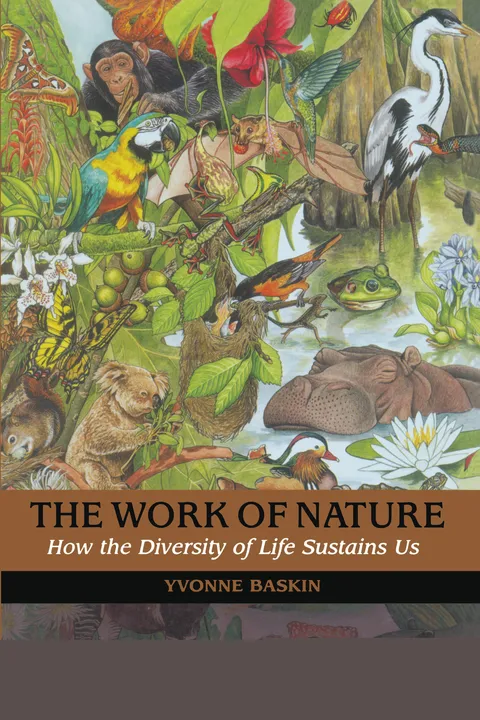
The lavish array of organisms known as "biodiversity" is an intricately linked web that makes the earth a uniquely habitable planet. Yet pressures from human activities are destroying biodiversity at an unprecedented rate. How many species can be lost before the ecological systems that nurture life begin to break down?
In The Work of Nature, noted science writer Yvonne Baskin examines the threats posed to humans by the loss of biodiversity. She summarizes and explains key findings from the ecological sciences, highlighting examples from around the world where shifts in species have affected the provision of clean air, pure water, fertile soils, lush landscapes, and stable natural communities.
As Baskin makes clear, biodiversity is much more than number of species -- it includes the complexity, richness, and abundance of nature at all levels, from the genes carried by local populations to the layout of communities and ecosystems across the landscape. Ecologists are increasingly aware that mankind's wanton destruction of living organisms -- the planet's work force -- threatens to erode our basic life support services. With uncommon grace and eloquence, Baskin demonstrates how and why that is so.
Distilling and bringing to life the work of the world's leading ecologists, The Work of Nature is the first book of its kind to clearly explain the practical consequences of declining biodiversity on ecosystem health and function.
Yvonne Baskin
Yvonne Baskin is author of The Work of Nature (Island Press, 1997) and A Plague of Rats and Rubbervines: The Growing Threat of Species Invasions (Island Press, 2002). Her articles have appeared in Science, Natural History, Discover, and numerous other publications.
More by Yvonne Baskin


Why Readwise Books?
Readwise Books is an ebook & audiobook platform that automatically logs how much you and your friends read, making it fun and easy to read more. Learn more →