Report an issue
Tell us what's wrong and we'll take a look.
Thanks – we got it. We'll review and follow up if needed.
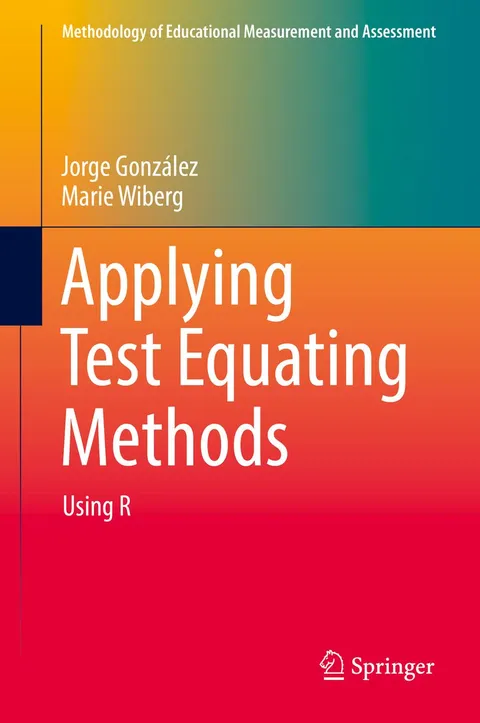
This book describes how to use test equating methods in practice. The non-commercial software R is used throughout the book to illustrate how to perform different equating methods when scores data are collected under different data collection designs, such as equivalent groups design, single group design, counterbalanced design and non equivalent groups with anchor test design. The R packages equate, kequate and SNSequate, among others, are used to practically illustrate the different methods, while simulated and real data sets illustrate how the methods are conducted with the program R. The book covers traditional equating methods including, mean and linear equating, frequency estimation equating and chain equating, as well as modern equating methods such as kernel equating, local equating and combinations of these. It also offers chapters on observed and true score item response theory equating and discusses recent developments within the equating field. More specifically it covers the issue of including covariates within the equating process, the use of different kernels and ways of selecting bandwidths in kernel equating, and the Bayesian nonparametric estimation of equating functions. It also illustrates how to evaluate equating in practice using simulation and different equating specific measures such as the standard error of equating, percent relative error, different that matters and others.
Jorge González
Jorge González was born in Buenos Aires, Argentina, and has been living in Spain for the last two decades. He tells all sorts of stories in all sorts of ways, with pastels, colored pencils, ink, and digital tools. He has published a number of graphic novels in Europe for grown-up readers, such as the books Fueye and Dear Patagonia. He has also contributed to The New Yorker and many other publications.
More by Jorge González



Why Readwise Books?
Readwise Books is an ebook & audiobook platform that automatically logs how much you and your friends read, making it fun and easy to read more. Learn more →