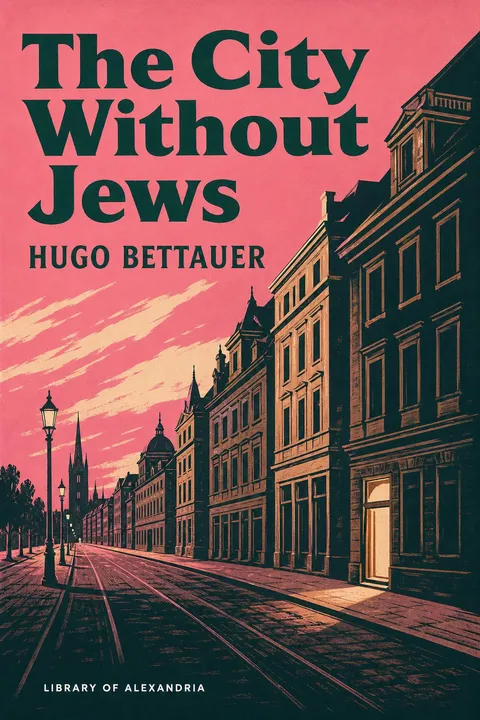
The City Without Jews
Political Satire of Antisemitism and a Society Undone by Its Own Prejudice
Report an issue
Tell us what's wrong and we'll take a look.
Thanks – we got it. We'll review and follow up if needed.
A nation celebrates an expulsion. Then it begins to discover what it has lost.
First published in 1922, Hugo Bettauer's The City Without Jews imagines an Austria swept up by antisemitic politics. Chancellor Dr. Karl Schwertfeger secures a law driving out the Jewish population, and cheering crowds greet the decision as a national victory. In Vienna, empty apartments seem at first to promise relief. But newspapers, theaters, banks, and coffee houses soon reveal the economic and cultural damage behind the celebrations.
Within this public disaster, Bettauer places a private act of defiance. Leo Strakosch, a young Jewish artist, secretly returns disguised as a Frenchman to be near Lotte Spineder, the woman he loves. His dangerous deception brings romantic comedy and suspense into a biting political fable. Moving between parliamentary rhetoric and ordinary households, the novel exposes the ease with which prejudice passes for common sense-and the difficulty of admitting that a popular policy has become a catastrophe. Its force lies in making the consequences visible rather than merely arguing against the slogans.
What readers find inside:
- Political manipulation - Schwertfeger turns resentment into legislation through arguments designed to make exclusion sound reasonable.
- A changing Vienna - The apparent benefits of expulsion give way to rising prices and a diminished cultural life.
- Love under threat - Leo's false identity allows him to return to Lotte while risking the law's harshest punishment.
- Dark social comedy - Officials, journalists, and citizens confront consequences their confident promises never allowed for.
- Collective responsibility - The changing mood of the crowds raises uncomfortable questions about political memory and belonging.
This novel will appeal to readers of classic political satire, Austrian literature, and fiction that examines antisemitism through the lives of people caught in its machinery.
Enter Bettauer's imagined Vienna and follow a society forced to reckon with the victory it demanded.
Hugo Bettauer
Hugo Bettauer (1872-1925) was a prolific Austrian writer and journalist, a very early victim of the Nazis
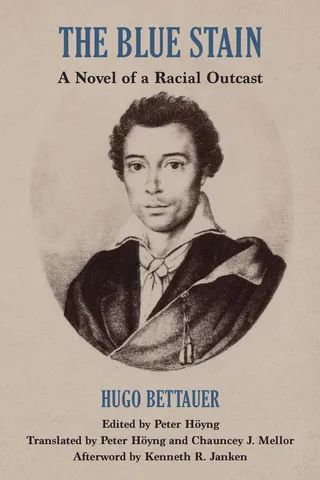
More by Hugo Bettauer


Why Readwise Books?
Readwise Books is an ebook & audiobook platform that automatically logs how much you and your friends read, making it fun and easy to read more. Learn more →