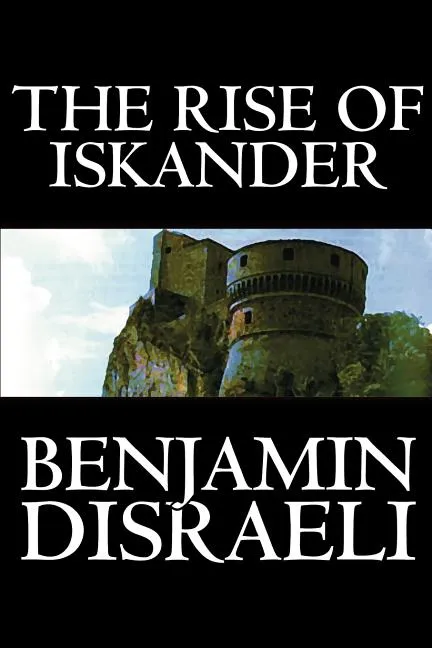
The Rise of Iskander by Benjamin Disraeli, Fiction, Historical
Report an issue
Tell us what's wrong and we'll take a look.
Thanks – we got it. We'll review and follow up if needed.
The sun had set behind the mountains, and the rich plain of Athens was suffused with the violet glow of a Grecian eye. A light breeze rose; the olive-groves awoke from their noonday trance, and rustled with returning animation, and the pennons of the Turkish squadron, that lay at anchor in the harbor of Piraeus, twinkled in the lively air. From one gate of the city the women came forth in procession to the fountain; from another, a band of sumptuous horsemen sallied out, and threw their wanton javelins in the invigorating sky, as they galloped over the plain. The voice of birds, the buzz of beauteous insects, the breath of fragrant flowers, the quivering note of the nightingale, the pattering call of the grasshopper, and the perfume of the violet, shrinking from the embrace of the twilight breeze, filled the purple air with music and with odor.
Benjamin Disraeli
Benjamin Disraeli, born on December 21, 1804, was a British statesman, Conservative politician, and writer who became the Prime Minister of the United Kingdom twice. He was the son of Isaac D'Israeli, a prominent writer and historian, and Maria Basevi D'Israeli. Disraeli played a crucial role in shaping the modern Conservative Party and is best known for his political philosophy of one-nation conservatism, or Tory democracy, which emphasized social reform alongside traditional values. Disraeli's political career was marked by his rivalry with Liberal leader William Ewart Gladstone, with whom he had numerous debates and conflicts. His leadership helped strengthen Britain's global influence, particularly in imperial matters. In addition to his political career, Disraeli was an accomplished writer. His early novels, such as Vivian Grey (1826), Popanilla (1828), and The Young Duke (1831), offered satirical critiques of British society and politics. Disraeli's literary works were an important aspect of his public life, reflecting his political views and sharp social commentary. He passed away on April 19, 1881, leaving a lasting impact on both British politics and literature.
More by Benjamin Disraeli













Why Readwise Books?
Readwise Books is an ebook & audiobook platform that automatically logs how much you and your friends read, making it fun and easy to read more. Learn more →