An Essay on Man
Report an issue
Tell us what's wrong and we'll take a look.
Thanks – we got it. We'll review and follow up if needed.
A definitive new edition of one of the greatest philosophical poems in the English language
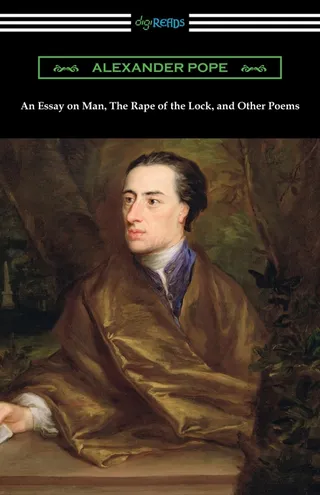
Voltaire called it "the most sublime didactic poem ever written in any language." Rousseau rhapsodized about its intellectual consolations. Kant recited long passages of it from memory during his lectures. And Adam Smith and David Hume drew inspiration from it in their writings. This was Alexander Pope's Essay on Man (1733–34), a masterpiece of philosophical poetry, one of the most important and controversial works of the Enlightenment, and one of the most widely read, imitated, and discussed poems of eighteenth-century Europe and America. This volume, which presents the first major new edition of the poem in more than fifty years, introduces this essential work to a new generation of readers, recapturing the excitement and illuminating the debates it provoked from the moment of its publication.
Echoing Milton's purpose in Paradise Lost, Pope says his aim in An Essay on Man is to "vindicate the ways of God to man"—to explain the existence of evil and explore man's place in the universe. In a comprehensive introduction, Tom Jones describes the poem as an investigation of the fundamental question of how people should behave in a world they experience as chaotic, but which they suspect to be orderly from some higher point of view. The introduction provides a thorough discussion of the poem's attitudes, themes, composition, context, and reception, and reassesses the work's place in history. Extensive annotations to the text explain references and allusions.
The result is the most accessible, informative, and reader-friendly edition of the poem in decades and an invaluable book for students and scholars of eighteenth-century literature and thought.
Alexander Pope
One of the most well-known English writers of the early 18th century, Alexander Pope (21 May 1688-30 May 1744) was an English poet, translator, and satirist of the Enlightenment era. Pope, a proponent of Augustan literature, translated Homer and is most known for his satirical and discursive poetry, such as The Rape of the Lock, The Dunciad, and An Essay on Criticism. He is also noted for his work in the Augustan movement. Pope is the second most quoted author in The Oxford Dictionary of Quotations after Shakespeare, and several of his verses have become part of everyday speech. On May 21, 1688, during the Glorious Revolution's year, Alexander Pope was born in London. In London's Strand, his father Alexander Pope, who lived from 1646 to 1717, owned a prosperous linen business. His mother, Edith (1643-1733), was a York-born descendant of William Turner, Esquire. They were both Catholics. Samuel Cooper, a well-known miniature painter, was married to his mother's sister. A philosophical poem in heroic couplets called An Essay on Man was written between 1732 and 1734. The Pope intended it to serve as the focal point of a system of ethics that would be presented in poetic form.
More by Alexander Pope


Why Readwise Books?
Readwise Books is an ebook & audiobook platform that automatically logs how much you and your friends read, making it fun and easy to read more. Learn more →